Last updated: 26th Aug 2026
11 author page examples that brilliantly demonstrate E-E-A-T.
 By James Brockbank, Managing Director & Founder
Get weekly SEO insights straight to your inbox.
Sign up to outranked, our weekly SEO newsletter
Most author pages suck.
Yep, just like most about us pages suck.
I’m going to take a pretty good guess that your author pages are little more than a standard template that shows your author’s name and a grid of their posts.
That, or that you don’t have any author pages at all, and are relying on a short byline underneath or alongside posts to showcase who the author is and what their experience and expertise are.
But that’s not good enough.
Author pages are among the most important page types on your site, and I want to inspire you to do better.
Keep reading, and let me share some examples of what are, in my opinion, ones that brilliantly demonstrate E-E-A-T.
Are your author pages good enough?
Go ahead and load up one of your website’s blog posts or guides. One that clearly has an author assigned.
Ask yourself whether this single page tells you:
- Who the author is
- What their experience is
- What their areas of expertise are
- How to contact them / find them on social
- The posts they’ve authored
And this is as a bare minimum.
I’m going to take a guess that your author pages don’t go into this much detail. But they should.
And now is the time to do something about this and reconsider how important these pages actually are.
Author pages are an opportunity to demonstrate E-E-A-T
Your site’s author pages are one of the best ways you can demonstrate on-page E-E-A-T signals at the author level.
(Take a read of our guide to E-E-A-T at the content, author and brand levels to learn more about what this means.)
You see, Google continues to double down on understanding who authored the content and whether that person has the experience and/or expertise required to publish on a given topic.
This starts by making it really easy to understand who is behind a piece of content and who they are.
The best way to do this?
Author pages. Plain and simple.
They’re the absolute baseline of E-E-A-T.
And no, just adding a byline to the end of posts isn’t enough. You need standalone author pages, optimised effectively to do a particular job.
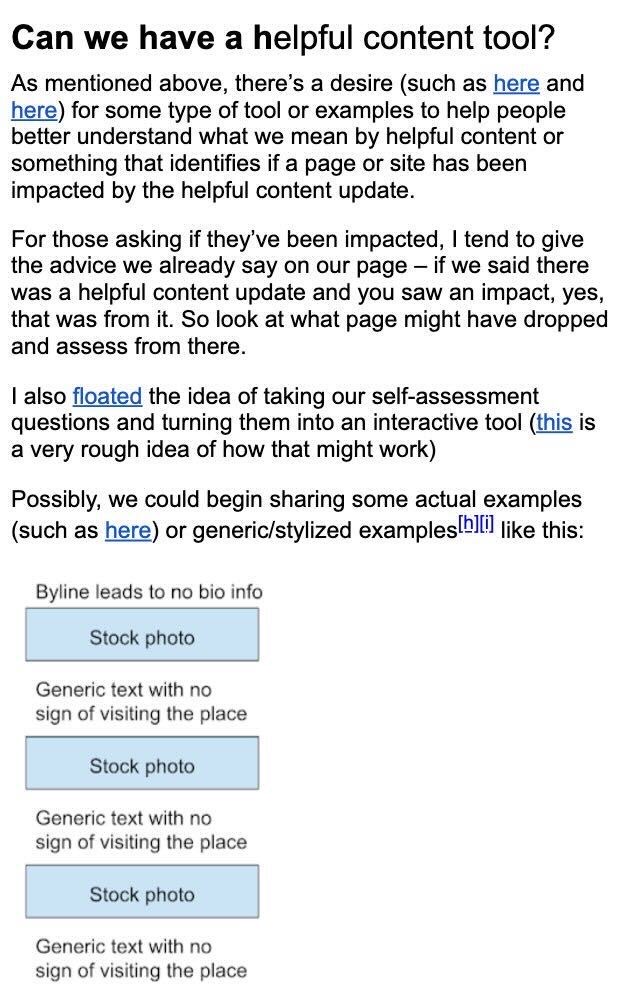
In fact, Google’s Danny Sullivan recently shared some insights on X about feedback he’d given to Google Engineers. One piece of feedback specifically mentioned the potential for a ‘self-assessment questionnaire’ for sites negatively affected by updates.
One example? “Byline leads to no bio info…” and we can take this as further suggestion that these are something we should definitely be putting effort into.
Use author pages to create an entity home
When done right, you can also use author pages as an ‘entity home’ for your people.
This is the central source of truth used when trying to land and maintain a Personal Knowledge Panel.
You can read more about what this is and how to get a Personal Knowledge Panel in Kalicube’s guide, but one thing you need to know is that Google has recently expanded the number of Person entities by more than 20 times between May 2020 and September 2023.
This, in itself, gives us a pretty good indication that Google is working harder than ever to better understand the people behind a site.
In many cases, your author pages make the perfect entity home, so long as they’ve been built out with sufficient information.
Take my own author page, as an example.
I’ve built this out as my own entity home, and am now seeing this used as the reference for the description for my own Personal Knowledge Panel:
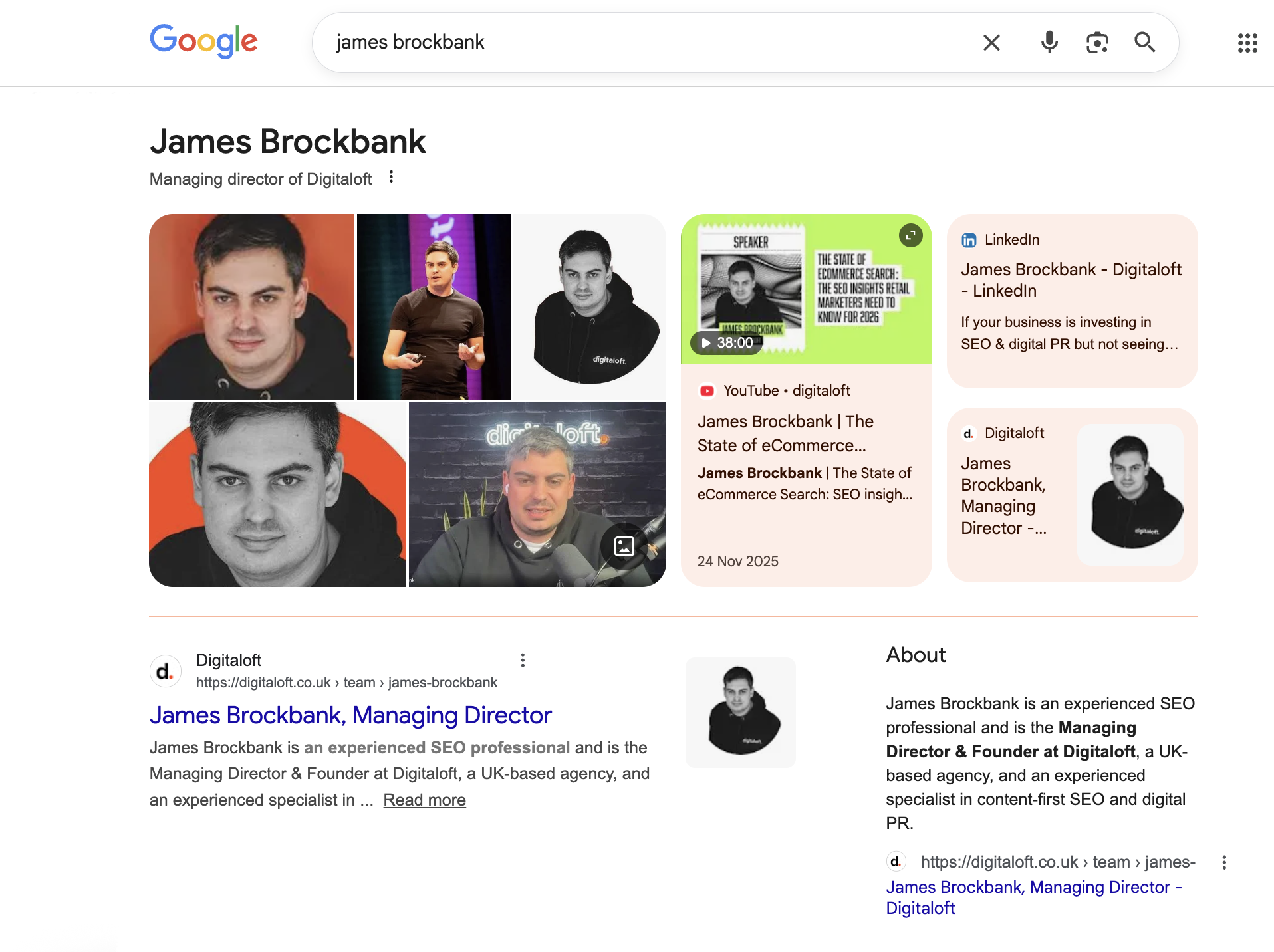
The days of author pages showing nothing but the person’s name and their latest posts are over, and now is the time to double down on significantly improving these pages. Yes, I founded and run an SEO agency, which gives me something of an unfair advantage. But the truth is, any business owner needs to be taking authorship seriously if they want to earn meaningful visibility.
11 Author Page Examples to Inspire Your Own
I’ve done the hard work for you and rounded up 11 author page examples that brilliantly demonstrate E-E-A-T to inspire your own pages.
Each of these examples does a fantastic job of defining who the author is, what their background is, and where else they can be found across the web.
So, go grab a brew, find a notepad, and make some notes.
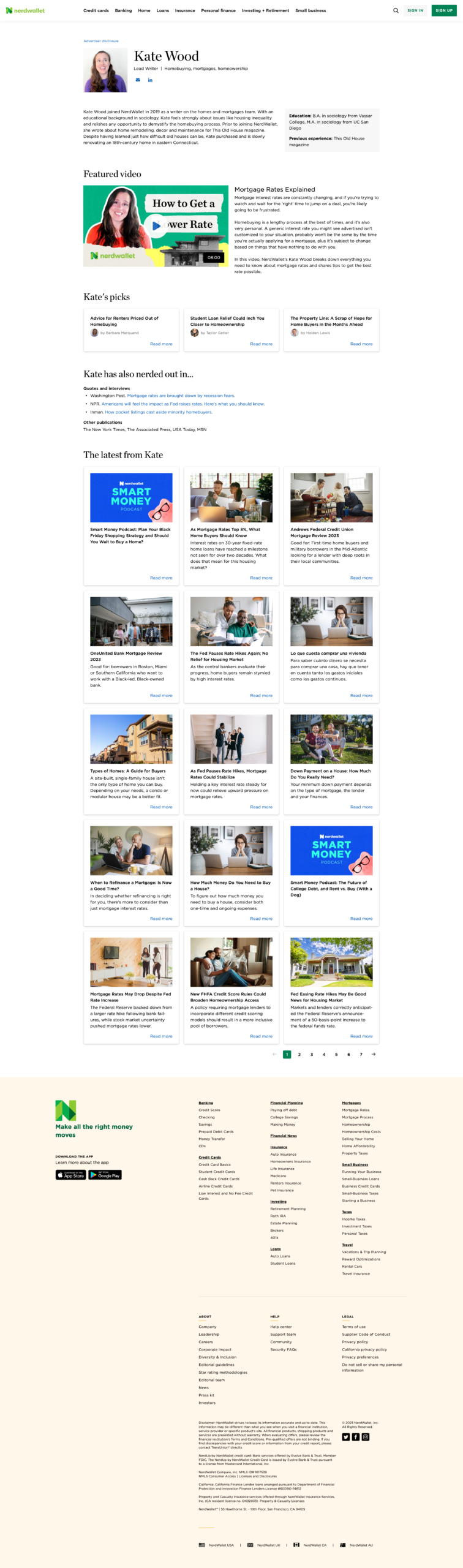
1. Nerdwallet
Nerdwallet is one of my favourite examples of an SEO success story, and there are many things they do very well. Their author pages are one of these things, and there’s a lot that we can learn from these.
In my opinion, they tick pretty much all the boxes of the perfect author page layout.
Nerdwallet is one of my favourite examples of an SEO success story, and there are many things they do very well. Their author pages are one of these things, and there’s a lot that we can learn from these.
In my opinion, they tick pretty much all the boxes of the perfect author page layout.
Standout features of Nerdwallet’s author pages:
- Job title and a summary of expertise: Clearly stating the author’s role and areas of expertise, in this example, “Lead Writer | Homebuying, mortgages, homeownership”.
- Detailed bio: Providing a comprehensive biography that includes the author’s background, experience, and even personal anecdotes. Kate’s bio, for instance, shares her journey from ‘This Old House’ magazine to NerdWallet, emphasising her focus on housing inequality and the homebuying process.
- Educational background: Highlighting academic credentials relevant to their field, like Kate’s B.A. and M.A. in sociology, which bolster her expertise in her writing subjects.
- Video content: Incorporating video, such as this example where Kate explains mortgage rates, increases user engagement and demonstrates the author’s expertise in a dynamic way.
- Features in other publications: Showcasing the author’s influence and authority in their field by listing appearances in major publications like the Washington Post, NPR, and others, evidencing the breadth and recognition of their expertise.
- Recent posts: Displaying a selection of recent posts allows readers to easily access the author’s work, demonstrating consistency and depth in their field.
These elements, together, make NerdWallet’s author pages not just informative but also engaging and comprehensive, effectively demonstrating E-E-A-T principles.
2. WalletHub
Perhaps no surprise that my second example comes from another finance brand, and, therefore, another YMYL site.
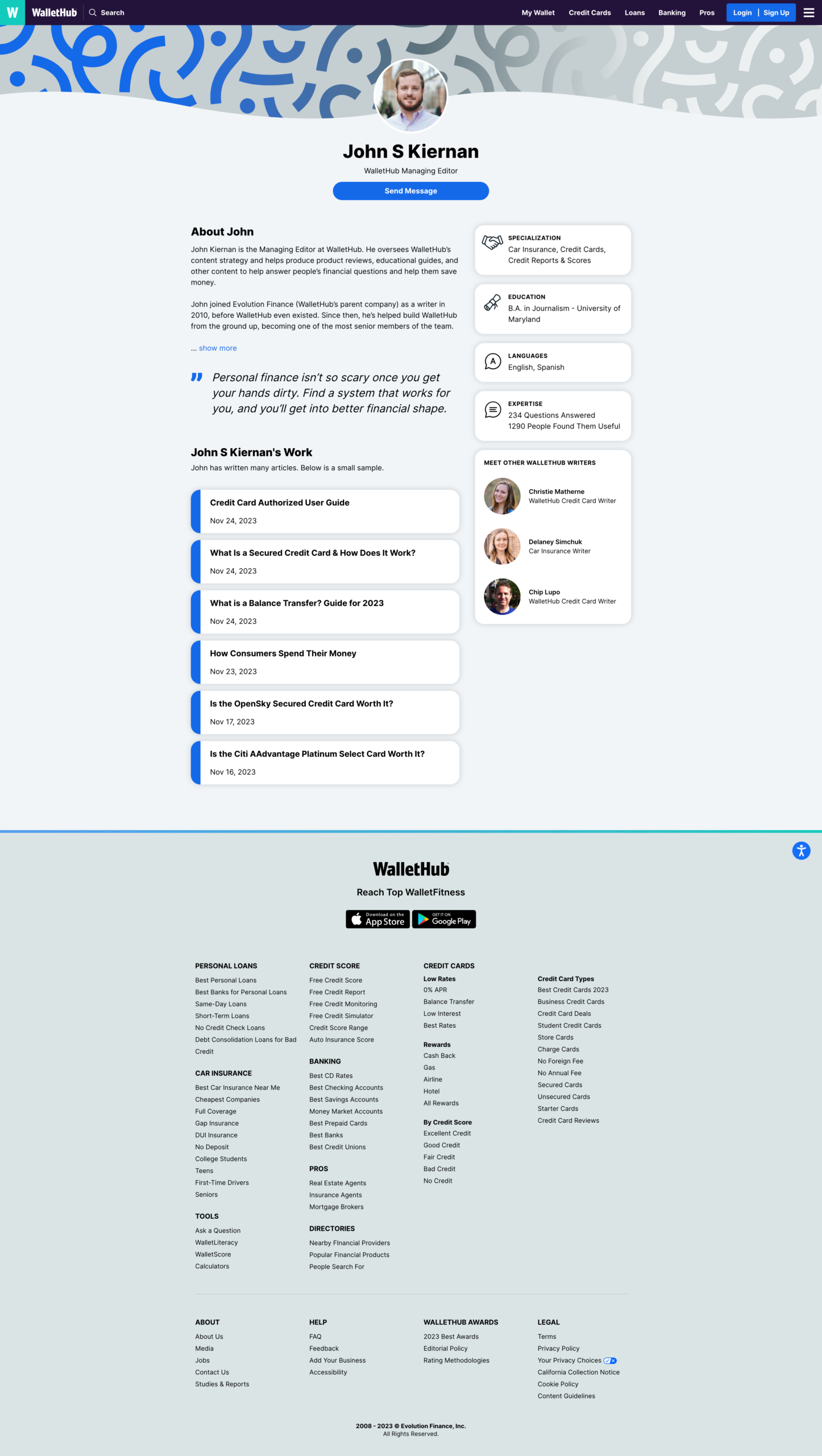
WalletHub’s author pages are simple but effective and are a great example for those wanting to keep theirs relatively lightweight and to the point.
Standout features of WalletHub’s author pages:
- About the author: Unlike most, WalletHub’s pages show a comprehensive about the author section but hide a fair bit of this behind a ‘show more’ button. This works well and, in my opinion, displays the key information before the expander, helping to keep the page concise.
- An author quote: Something that’s not often seen on many author pages but does a great job of adding a personal touch is the inclusion of an author quote. This, above anything else, starts to build your trust in the authors, helping you to see their thoughts on a key topic.
- A unique way to demonstrate expertise: What really works well here is how WalletHub showcases its authors’ expertise. Rather than just listing areas of expertise, they showcase how many questions the author has answered on the site and how many people found these useful.
- A selection of posts: Whilst many sites display every article an author has written, WalletHub has chosen to show only a selection. But all of these are recent and show the author’s comprehensive coverage of key topics. In my opinion, there’s no downside to this.
3. Verywell Fit
Verywell Fit’s organic rankings drive more than 6.5 million monthly visitors in the incredibly competitive health and fitness space, and their efforts to demonstrate E-E-A-T as a publisher can give us plenty of inspiration for our own sites.
Shown here using Paige Waehner’s profile, the pages showcase several ways to help Google connect the dots via author pages, demonstrating the use of third-party references.
Standout Features of Verywell Fit’s Author Pages
- Highlights: Opening with the author’s highlights is, in my opinion, a fantastic inclusion that we don’t see used nearly enough. Each of these highlights backs up what’s being said with a link to an external source, strengthening its validity. In just three bullet points, we can see the author’s credentials, real-world experience, and published works.
- Experience and education: Verywell Fit’s experience and education sections aren’t necessarily anything different to what most should be doing, but that’s kind of the whole point. They’re a great example of concisely backing up an author’s experience and expertise.
4. Bankrate
Bankrate is widely regarded as one of the US’s biggest sites for financial advice and guidance, and there’s no doubt they’ve invested heavily in staying ahead of the competition in recent years.
And their author pages are ones I think you’ll want to bookmark for your own inspiration, giving us a great example of how to profile authors in the YMYL space.
Standout features of Bankrate’s author pages:
- Expertise Hooked to the Site’s Focus Areas: You’ll notice, down the right-hand side, that the author’s expertise is clearly hooked to the site’s key focus areas. By keeping the expertise simple rather than writing a long editorial, it’s really easy to understand the areas they’re an expert in.
- Recommended Readings: Including the author’s recommended readings on the site showcases their stance on what they consider to be other great content on the site. These are posts by other authors, but they fit really well and help cross-reference other content.
- Beyond Bankrate: One of the most important aspects of E-E-A-T is connecting the dots, and including this ‘beyond bankrate’ section is a great way to link out to other authoritative places across the web where the author has been featured.
5. LloydsPharmacy Online Doctor
It’s no surprise that many of the best examples of author pages come from the YMYL space, but it’s interesting to examine how eCommerce retailers handle E-E-A-T through their author pages, given that many of our examples so far have been publishers.
LloydsPharmacy Online Doctor has, in my opinion, some of the best author pages in their space, despite being a hybrid between meet-the-team and author pages. They’re a great example of how you can use author pages for this purpose when thought out properly.
Standout features of LloydsPharmacy Online Doctor’s author pages:
- Professional Role and Experience: The author page begins with a clear statement of Dr Seyan’s current role as Chief Medical Officer and his medical directorship, overseeing clinical practice and prescribing. It also notes his extensive experience in general practice, urgent care, and sexual health medicine, and highlights his active role as a locum GP.
- Educational and Professional Qualifications: Dr Seyan’s page lists his qualifications, including a Diploma of Tropical Medicine & Hygiene and degrees from University College London. It also notes his membership in prestigious medical associations, including the Royal College of General Practitioners and the European Society of Sexual Medicine, underscoring his academic and professional credentials.
- Speciality and Interests: The author page details Dr Seyan’s medical specialities and areas of interest, such as General Practice and Digital Medicine. It also highlights his contributions as a GMC Expert Advisor and his voluntary work in Nepal, showcasing his diverse interests and commitment to healthcare.
- Research and Publications: The page features a section dedicated to Dr Seyan’s research and publications, including works published in respected journals such as the BMJ and contributions to international conferences. This section not only highlights his research skills but also his engagement with the wider medical community.
- Media Appearances and Contributions: Dr Seyan’s author page lists his appearances and contributions across various media outlets, including podcasts and articles in well-known publications such as The Telegraph and Cosmopolitan. This aspect of the page demonstrates his ability to communicate medical knowledge to a broader audience, enhancing his authority and public outreach.
What this site’s author pages don’t do is show a grid of posts authored or reviewed by the GP, nor do they include links to their socials or contact details. Still, these are about the only recommendations I’d make to improve these.
These elements, combined, make Dr Kieran Seyan’s author page on LloydsPharmacy Online Doctor not only informative but also a testament to his expertise, authority, and trustworthiness, effectively demonstrating the necessary E-E-A-T principles.
6. GoCompare
GoCompare is one of the UK’s leading comparison sites, and its author pages offer something a little different to most.
In fact, they’re a long way from what most sites do, but given their rankings and visibility, they are clearly working to help the site demonstrate E-E-A-T.
Standout features of GoCompare’s author pages:
- A Q&A-style author bio: GoCompare’s author pages use a very effective question-and-answer format to really dig into the author’s experience and expertise, and, in my opinion, it works really, really well. It’s almost a mini-interview about their background, and it makes it way more engaging to read. Often, bios can read a little robotic, simply because it’s hard to write about yourself that way. But a Q&A style feels a lot more natural, and engages the reader, too, whilst getting across the same information.
- The use of first person: As a byproduct of the Q&A format, using a first-person narrative is brilliant and really helps convey the author’s background in their own words.
- Author quotes: As we saw on WalletHub’s pages, they are highly effective at conveying a key message. They still seem to be used so rarely, but when it comes to authenticity and profiling why people should trust an author, they’re something that should be seen more often.
7. Credible
Here’s another finance example, again from a site that has understood the importance of keeping author pages concise and to-the-point, whilst focusing on the things that ultimately demonstrate E-E-A-T.
Credible’s author pages are a great example of a page that’s easy to replicate, whilst still being impactful.
Standout features of Credible’s author pages:
- Extensive experience: The page introduces Matt Carter as a journalist with 20 years of experience across print and online publications, instantly establishing his long-standing expertise in the field. This experience lends credibility to his insights and analysis in the personal finance space.
- Focused areas of expertise: Matt’s areas of expertise are clearly outlined, including mortgages, real estate, budgeting, and student loans. This specificity helps readers understand his particular strengths and the scope of his knowledge in the financial sector.
- Personal finance experience: The page highlights Matt’s role in tracking financial industry trends and producing news and analysis pieces. His work is geared toward helping consumers stay informed and make smart financial decisions, underscoring his commitment to consumer education.
- Previous Experience and Recognitions: Matt’s previous contributions have been featured in national publications such as CNBC, CNN Money, and The New York Times, and it’s great to see this acknowledged. His past coverage of mortgages, title insurance, and real estate services for Inman.com, including a highly acclaimed series on subprime mortgage lending, showcases his authority and excellence in financial journalism.
- Educational background: Matt’s educational journey, including his studies in journalism at San Francisco State University and his early contributions to the student newspaper, is detailed, further bolstering his expertise and experience.
- Recent posts: Including recent posts offers readers quick access to his current work whilst further illustrating his wide coverage of complex financial topics.
These standout features come together to make Matt Carter’s author page on Credible not just informative but comprehensive, effectively demonstrating his expertise, authority, and trustworthiness in the field of personal finance.
8. Confused.com
Confused.com are a brand that I recently featured in my roundup of awesome about us page examples, so it’s no surprise to see them featured here, too.
One of the UK’s leading financial comparison sites, Confused.com, is demonstrating a very high level of E-E-A-T, and its dedication is paying off.
Standout features of Confused.com’s author pages:
- Professional focus and mission: There’s no doubt here about the author’s professional focus. But understanding the author’s mission is also key, and Louise Thomas, identified here as a Motor Insurance Expert, articulates her aim to empower customers with knowledge and tools to find the right insurance cover. This opening statement establishes her commitment to making car insurance a seamless, transparent process, highlighting her customer-centric approach.
- Career background and progression: The page details Louise’s professional journey, starting from her time at Veygo UK on their marketing team before becoming a product owner. It also describes her significant role in launching the mortgage comparison feature and managing a suite of motoring products at Confused.com. This narrative demonstrates her expertise and versatility in the insurance and finance industry.
- Areas of expertise: The page lists specific areas, including car insurance, van insurance, motorbike insurance, and car finance. This section highlights her specialised knowledge in various aspects of motor insurance, adding depth to her profile and building trust.
- Content contributions: The author page showcases Louise’s contributions to the site, featuring articles on topics such as the future of car ownership and the transition from petrol to electric vehicles. These articles reflect her thought leadership and ability to address current, relevant topics in the insurance industry, and they make it easy to connect the dots with her other content.
- Media recognition and coverage: Louise’s recognition in national publications and her contributions to The Guardian and Sky News are highlighted. This aspect of her profile emphasises her authority in the field, showcasing her role in providing insights and commentary on a range of insurance-related topics.
These features, combined, make Louise Thomas’s author page on Confused.com not just informative but also a testament to her expertise, authority, and trustworthiness in the field of motor insurance, demonstrating a level of effort beyond what most sites offer.
9. Search Engine Journal
I’m pretty sure that if you’re reading this article, there’s a fair chance you’ve browsed Search Engine Journal’s library of wisdom as well. But have you ever taken the time to look at how their author pages are structured?
They’re good.
In fact, they’re very good! Especially when it comes to demonstrating E-E-A-T. Now, maybe it’s no surprise that a publication in the SEO industry ticks all the boxes when it comes to author pages, but they’re an example that we just can’t ignore, as far as I’m concerned.
Standout features of Search Engine Journal’s author pages:
- Job title and tenure: The page introduces Matt as the Senior News Writer, highlighting his long-term association with Search Engine Journal since 2013. This establishes his expertise, experience, and dedication to the field.
- Educational background: His qualifications, including a bachelor’s degree in communications from Laurentian University, are clearly stated, reinforcing his proficiency in journalism and content creation.
- Expertise in specialist areas of SEO: The page outlines his expertise in international SEO, local search, mobile SEO, technical SEO, and content marketing. This detailed breakdown showcases his comprehensive knowledge of SEO and digital marketing. This is so simple yet so effective a way to show that an author is an expert in the topic.
- Recent posts: Matt’s author page lists his recent posts, making it really easy to associate individual pieces of content with his profile. This not only demonstrates his active role in producing content but also provides insights into the topics he covers and their recency.
- Social profiles and contact Information: The page includes links to his social media profiles and contact information, encouraging engagement and offering readers additional ways to connect with him and follow his work. Again, this is all about transparency; something that very much goes hand-in-hand with E-E-A-T.
10. Investopedia
Investopedia is another site that I think every SEO has spent time analysing at some point, and they’re often seen as the gold standard for many tactics when it comes to putting in the effort and going the extra mile.
And their author pages are no different.
We know there’s a requirement for YMYL sites’ E-E-A-T efforts to go above and beyond what some sectors do, but once again, Investopedia strikes that balance of depth and simplicity really well.
Standout features of Investopedia’s author pages:
- Simple & Concise Information: The opening section of these pages is simple yet conveys the necessary information. Adding little touches like ‘resides in’ really helps to build a picture of who these people are, as well as their backgrounds
- A Summary: Another really effective feature here is how Investopedia uses the summary section to quickly provide an overview of the author. No one ever said author pages and bios need to be lengthy; they just need to get across the right information.
11. Retro Dodo
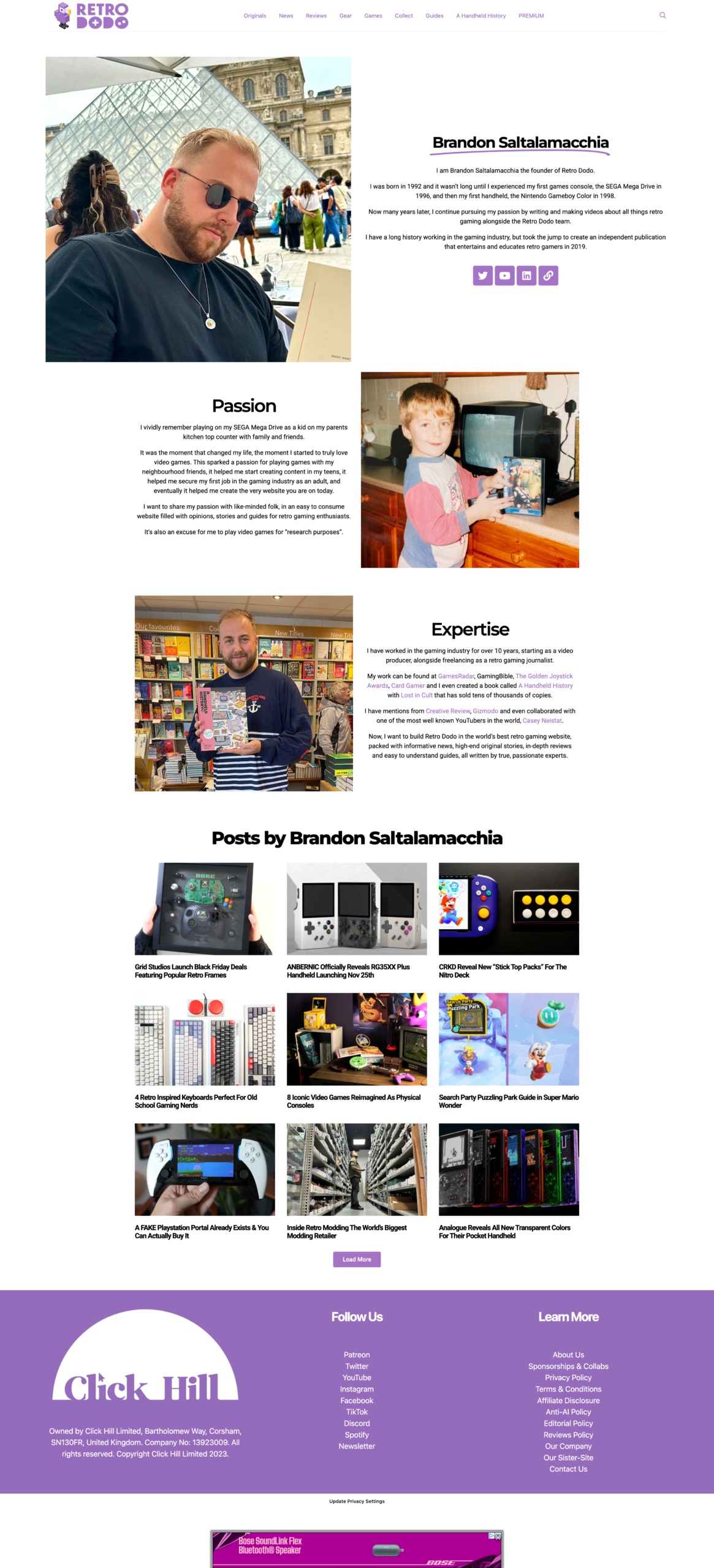
Perhaps the most niche site included here, and likely the smallest too (in terms of wider brand recognition), Retro Dodo has put an incredible amount of effort into its author page, which reads somewhat more like a story than a typical bio.
Standout features of Retro Dodo’s author pages:
- Sharing a Personal & Professional Journey: These author pages start with a personal narrative that describes, in this case, Brandon’s early experiences with gaming consoles and his journey to founding Retro Dodo. This narrative establishes a connection with the audience by sharing a relatable passion for retro gaming and by demonstrating his long-standing involvement in the gaming industry. In other words, showcasing experience AND expertise.
- An Insight into a Passion for Gaming: Brandon shares his lifelong love for video games, which began in childhood and influenced his career path. This passion is a critical element of the page, showcasing genuine enthusiasm and expertise in retro gaming once again.
- Industry Experience & Contributions: The page highlights Brandon’s more than a decade of experience in the gaming industry, including roles as a video producer and retro gaming journalist. It also showcases his contributions to various platforms and projects, including GamesRadar, GamingBible, and his book “A Handheld History,” indicating his wide recognition in the gaming community. These all combine to suggest Brandon’s pretty authoritative in his space.
- Press collaborations & Mentions: Brandon’s work has garnered attention from popular media publications and has included collaborations with well-known YouTubers, such as Casey Neistat. These links further establish his authority and influence in the field.
- Recent posts: These author pages list the author’s posts, offering readers easy access to their wider work on Retro Dodo. This collection demonstrates Brandon’s expertise and dedication to providing in-depth, informative content about retro gaming. It’s simple: make it easy for users and search engines to find other content the writer has authored.
These elements collectively make Retro Dodo’s author pages not just informative but also a compelling story of passion turned profession, effectively demonstrating E-E-A-T principles.
It’s not always about formal education, and this is the perfect example of an author page that, above anything else, just feels genuine.
A final word on author pages
If your author pages aren’t as good as these examples, then now is the best time to do something about it.
There is a stack of evidence suggesting that Google is continuing to double down on understanding who authors are and what their experience and expertise are. From an on-page perspective, author pages are your best way to demonstrate this.
Don’t get left feeling defE-E-A-Ted by author pages and showing Google the right trust signals. Digitaloft is a specialist SEO agency with over a decade of experience helping brands achieve targeted organic growth. Speak to our team of experts for tailored insights on how we could help your business win by owning the search moments that matter to you.