Last updated: 21st Aug 2026
E-commerce E-E-A-T: How to demonstrate E-E-A-T as an online retailer.
 By James Brockbank, Managing Director & Founder
Get weekly SEO insights straight to your inbox.
Sign up to outranked, our weekly SEO newsletter
You could be forgiven for assuming that E-E-A-T is only important to brands in the finance and medical niches (which are most commonly seen as YMYL), but that’s absolutely not the case.
E-E-A-T is something every business needs to demonstrate, with some industries needing to do more than others. And this is absolutely the case for eCommerce retailers.
In fact, eCommerce stores fall squarely into the YMYL category.
How well you demonstrate E-E-A-T is one of the most important factors to consider when putting together an eCommerce SEO strategy.
And in this guide, I’m going to share a number of practical ways that you can do this.
Keep reading to learn why E-E-A-T is so important for eCommerce brands, what we can learn from Google’s Quality Rater Guidelines and how to go about demonstrating it.
E-E-A-T for eCommerce brands
Doubling down on E-E-A-T is one of the biggest SEO opportunities for many eCommerce brands right now, yet many still haven’t woken up to just how important this is.
Take steps to demonstrate these signals more effectively than your competitors, and I’m pretty confident you’ll find your store thriving through Google algorithm updates in 2024.
But what exactly is E-E-A-T?
What is E-E-A-T?
E-E-A-T (Experience, Expertise, Authoritativeness and Trustworthiness) is how Google’s Quality Raters evaluate the search engine’s ranking systems and assess the quality of a page.
But it’s not a ranking factor. It’s a set of signals.
It’s all about demonstrating that your site deserves to rank; that you’re a trusted brand, and that the people behind your content are experienced, have built up expertise in your industry and are considered to be authoritative.
Check out our E-E-A-T: Everything You Need to Know guide to learn more about what E-E-A-T is, why it matters and why it’s not something you can fake.
E-E-A-T often gets talked about in the context of publishers, niche sites (yes, I hate this terminology, too) and sites in the medical and finance spaces, but it’s something that every site must pay attention to.
Hyung-Jin Kim, VP of Search at Google, confirmed at SMX Next 2022 that:
E-E-A-T is a template for how we rate an individual site. We do it to every single query and every single result. It’s pervasive in everything we do.
Hyung-Jin Kim, SMX Next 2022
And this means it’s just as important for eCommerce retailers to ensure their sites demonstrate E-E-A-T as it is for pretty much any other type of business.
Why?
Because the underlying concept of E-E-A-T is proving that your site deserves to rank on the SERPs.
Why you can’t ignore E-E-A-T as an eCommerce retailer
Since E-E-A-T was first seen in Google’s Quality Rater Guidelines in 2014, it’s become an increasingly prevalent feature in Google algorithm updates. Especially following 2018’s Medic Update.
But one thing that’s not talked about nearly enough is that many of the sites hit by September 2023’s Helpful Content Update are not sufficiently demonstrating E-E-A-T.
Many of the sites that saw a decline in visibility during this update:
- Publish content by people who aren’t subject matter experts
- Lack trust signals
- Do not visibly display who (the business or people) is behind the site
There’s a very good chance that Google’s Helpful Content System has been trained on content that displays a High or Very High level of E-E-A-T.
Google’s goal is to provide searchers with the best results when they enter a search query. And ‘best’ isn’t just based on the content itself. It also means ensuring that the results that are served on the SERPS are trustworthy sites that aren’t going to harm a user in any way.
And in a world where anyone can create content about any topic, even those they know nothing about, in minutes using ChatGPT, it’s no surprise that Google continues to double down on updates that reward sites that deserve to rank.
As an eCommerce retailer, you’re taking payments from your customers. And for this reason, your site is classified as YMYL (Your Money or Your Life).
Google has a responsibility to ensure that the sites that it returns on the SERPs can be trusted, and Trust is clearly defined as the most important part of E-E-A-T in the Quality Rater Guidelines.
But forget SEO for a moment.
Many (if not all) of the elements that make up E-E-A-T are also expected by customers.
Any eCommerce marketer knows how important it is for your customers to trust the brand from the moment they first land on the site to long after they’ve received their order. And for that reason, the most successful stores go above and beyond to build partnerships with couriers they can trust, to make it easy and secure for customers to make payments, and to continually find ways to delight and reward those who have bought, persuading them to become repeat purchasers.
Taking E-E-A-T seriously isn’t just good for SEO. It’s good for your customers, too.
And anything that’s good for your customers is never wasted effort.
What Google’s Quality Rater Guidelines tell us about E-E-A-T for eCommerce
E-E-A-T is something that’s discussed at length in Google’s Quality Rater Guidelines.
In fact, it’s mentioned a total of 116 times within the document. Trust is mentioned 169 times.
But what do the QRGs tell us about E-E-A-T that’s relevant to eCommerce retailers? An awful lot, in fact.
Taking the time to read the Quality Rater Guidelines gives us a great insight into the specifics of what raters are encouraged to consider when rating online stores.
Here are the key references…
- For shopping websites, we’ll ask you to do some special checks. Look for contact information—including the store’s policies on payment, exchanges, and returns. Sometimes this information is listed under “customer service.” (p.18)
- Customer reviews can be helpful for assessing the reputation of a store, business, or any website that offers products or services to users. You may consider a large number of detailed, trustworthy, positive user reviews as evidence of positive reputation for a store or business. (p.23)
- Any store or business can get a few negative reviews—this is completely normal and expected. Large stores and companies receive thousands of reviews, and most receive some negative ones. (p.23)
- Online stores need secure online payment systems and reliable customer service. (p.26)
- Consider the topic of the page, the type of website, and the extent to which YMYL standards apply. Give special scrutiny to pages or websites needing a high level of trust, such as online stores, medical websites, or news coverage of major civic issues. (p.29)
- Within the context of pages lacking E-E-A-T, this includes a page or website that is not trustworthy for its purpose, e.g. a shopping page with minimal customer service information. (p.51)
- Stores and websites that process financial transactions require a high level of user trust. If a store or financial transaction website has just an email address and physical address, it may be difficult to get help if there are issues with the transaction. (p.53)
- Pages that offer payment functionality or process other types of financial transactions should receive a Low rating if there is an unsatisfying amount of customer service information or contact information. (p.53)
- Pages on YMYL topics and other pages that require a high level of user trust should receive a Low rating if there is an unsatisfying amount of information about who is responsible for the website or who created the content. (p.53)
- Within an example of a page demonstrating high E-E-A-T for the purpose of the page, this is a well-known, reputable merchant, with detailed Customer Service information on the site, making it very trustworthy (Trust). (p.64)
- An example page demonstrating very high E-E-A-T for the purpose of the page provides a lot of helpful product information, as well as 600 user reviews. Since the store produces this backpack, they are experts on the product, making the page on their own website authoritative. In addition, this store has a reputation for producing some of the highest-quality and most popular school backpacks on the market. (p.64)
- Within an example of a page demonstrating very high E-E-A-T for the purpose of the page, a company sells its own line of high-end, fashionable baby and children’s furniture and accessories. It has a positive reputation and expertise in these specific types of goods. Many products sold on the site are unique to this company. (p.64)
These are the main references in the QRGs that specifically address eCommerce stores. And the main learnings we can take from these are:
- Policies matter. Make sure these are in place and up to date. Not having them potentially signals a lack of trust.
- Reviews are essential; they’re a way to understand the reputation of a store.
- Detailed customer service information goes hand in hand with trust. Make sure it’s easy for your customers to get in touch.
Practical ways to demonstrate E-E-A-T as an eCommerce retailer
Demonstrating E-E-A-T as an eCommerce retailer doesn’t need to be difficult.
And, for the most part, it’s all about putting yourself in a mindset of building and showcasing the reputation of your brand and its people.
There’s no single checklist of E-E-A-T factors, but there are things you can, and should, be doing to demonstrate these signals.
If your site isn’t leveraging the tactics I’m going to lay out below, you’ve got work to do…
Make it easy for customers to contact you
Whether it’s a potential or existing customer who wants to get in touch, it shouldn’t be difficult for them to do so.
Make it easy for people to get in touch with you, as a minimum, ensuring you’re clearly showing:
- A contact page
- An email address (that’s for your site’s domain, not Gmail etc.)
- A phone number
- An address (not a mailbox or virtual office)
Make it easy for someone to get in touch.
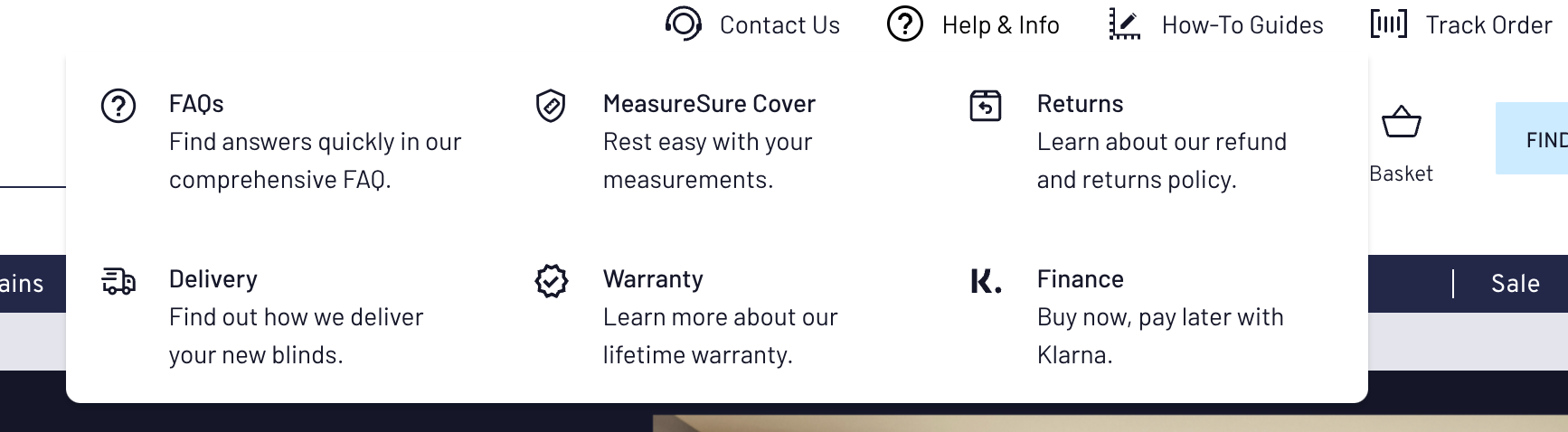
Don’t hide delivery & returns information
Some of the most common questions online retailers get are about delivery and returns information.
So make sure it’s easy to find this.
Most stores feature these in the site’s footer, and that’s fine. It’s where most consumers have come to expect to find these.
But there’s also an increasing number of people placing these in the header section, knowing how important these are to people.
Provide multiple trusted payment options
When you’re taking payments, make sure you’re giving your customers options. People have their own preferences, and it’s important that you offer more than one payment method.
These differ by country, and the most popular payment methods in one country aren’t the same in another.
But in the UK and US, at least, you want to be accepting:
- Visa
- Mastercard
- American Express
- PayPal
- Klarna (if it makes sense)
Don’t forget that, to many consumers, this is a very big deal and a massive trust factor. Choose wisely and make sure it’s easy for people to see what options you offer.
Use original photos, video & other media
Whilst it’s tempting to rely on manufacturer images to use on your product pages, there’s a lot of benefit to putting in the effort to create original photos, videos and other media.
For one, it demonstrates E-E-A-T by showing that you’re actually stocking the products yourself, not just dropshipping. And that, when it comes to the experience factor, is that you’ve seen these in person.
At the end of the day, whilst not every retailer is going to carry stock of every product, there’s a lot to be said for those retailers who truly know their products inside out, and they’re the ones who go that extra mile.
Added to this is the fact that creating your own media helps you to stand out. If everyone else is using manufacturer images and you’re not, you’ll be the one who grabs attention.
Use UGC to showcase your customers using your products
One thing we’ve seen a surge in over the last few years is UGC being used by eCommerce retailers as part of their store’s experience. Often, as a way to enhance product pages.
And this is something I’d strongly recommend if you’re able.
Why?
Because there’s nobody better than your customers to showcase your products.
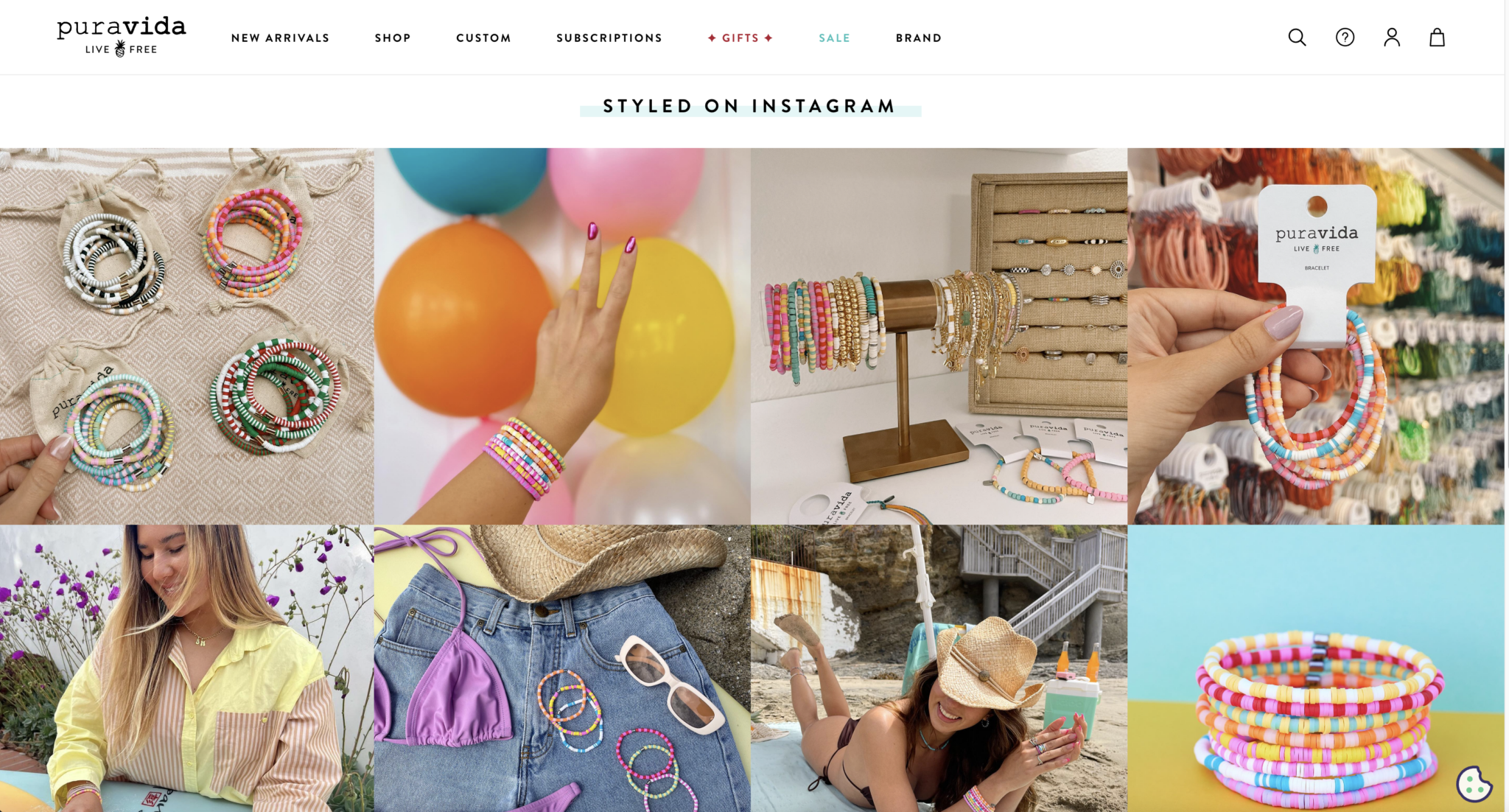
A great example of this out in the wild is how Pura Vida includes a selection of UGC images from Instagram on each product page:
Product and category content that’s packed full of E‘s
You need to work out how to demonstrate the two E’s: Experience and Expertise across your product and category pages.
And what this means is different for every business. Some options to consider are:
- Introduce FAQs to category pages if they’ll help customers answer common questions
- Make it easy to find relevant buying guides on category pages; link out to these where it makes sense
- Use video and image content on product pages where it helps to show how your products are or can be used
- If you’re selling clothing, for example, consider coming up with visual ways to show sizing etc.
- Highlighting the most common sizes or variations of products
You need to find ways to show that you know your product offering inside out, and what your customers want, and doing so on the product and category pages themselves can help you to go one step beyond your competitors.
Use informational content to share your experience & expertise
Informational content, as an eCommerce brand, should be your secret weapon.
It’s your way to truly demonstrate your brand and your people’s experience and expertise, and show that you’re more than just a retailer. You’re a brand that knows the industry inside out and is curating the best products for your customers, whatever they might be.
Yet so many eCommerce brands still aren’t waking up to the value of investing in a content strategy that helps you to be more visible and showcases your knowledge.
Just remember this: without informational content, many eCommerce stores are pretty much like-for-like if they’re selling the same products as their competitors.
What can set you apart? And especially from a perspective of demonstrating E-E-A-T?
Informational content.
But stop thinking of this just as being a blog. Start thinking of the place where you host your site’s informational content as a resource hub, and you’ll soon have a different opinion about the value it can bring.
Here are some top tips and starting points for leveraging informational content:
Write guides, buyers’ guides & FAQ content
The cornerstones of your informational content strategy should be:
- Guides: Think informational content that teaches customers more about your wider industry or how to use your products
- Buying Guides: Help your customers choose the right products with helpful, insightful guides.
- FAQ Content: Identify your customers’ most common questions about your products and brand, and create content to address them. Prevent them from having to message or phone you and ask; make it easy for them to get answers.
Of course, these aren’t the only content formats you can use, and you should be working on news content when you’ve got something to shout about. But in terms of demonstrating your experience and expertise, these are a great place to start.
Have a subject matter expert author the content
Make sure you’ve got your brand’s subject matter experts authoring your content.
I can’t stress this enough.
E-E-A-T can (and should) be demonstrated at the content, author and brand levels, and part of this is building and demonstrating the reputation of your others.
Publish content under the name of your experts, and avoid doing so under ‘admin’ ‘[business name]’ or, just as bad in my opinion, your marketing exec!
It takes subject matter experts to build trust, so use them.
Include a short author bio alongside posts
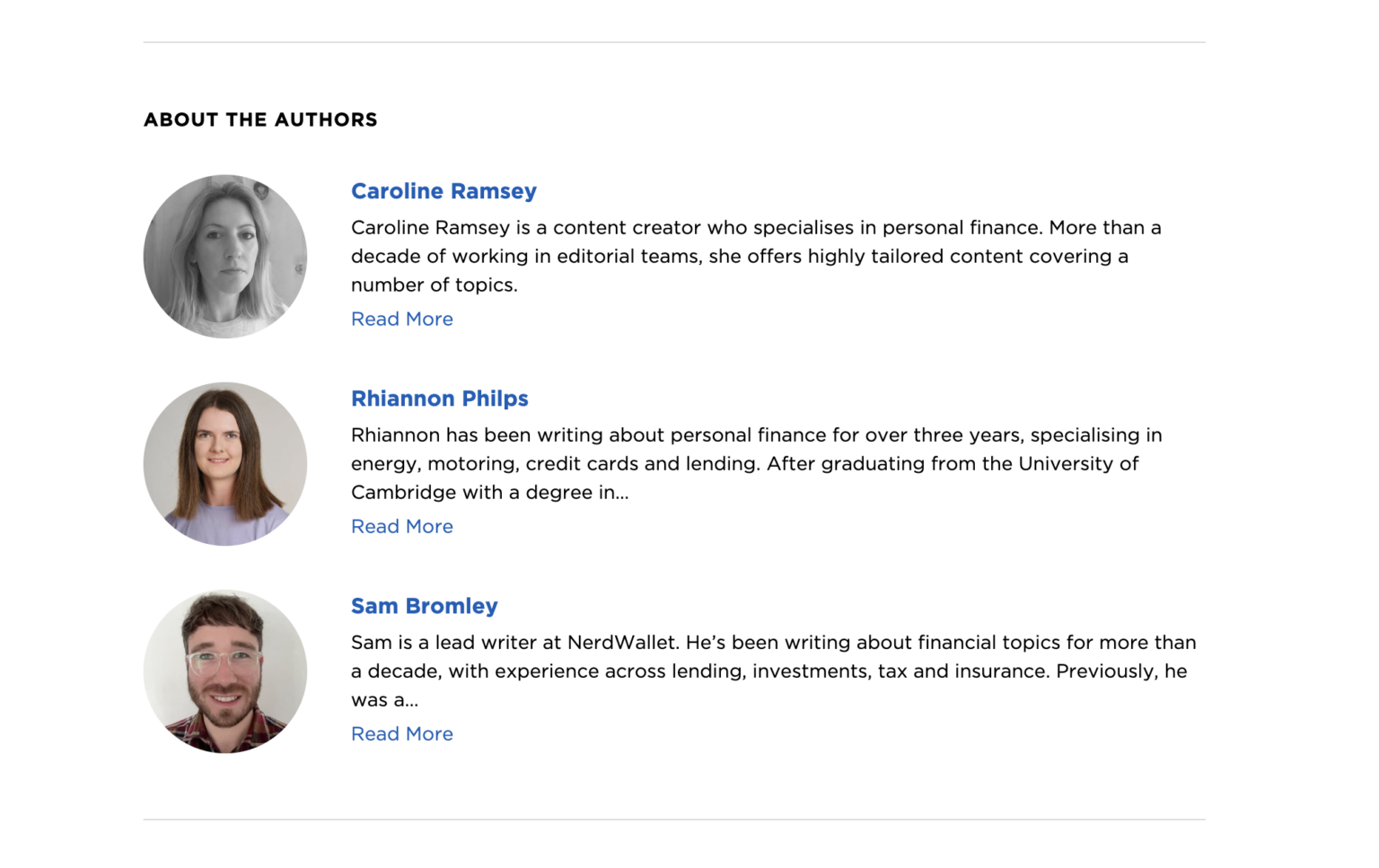
Make sure you’re including a short author bio on the post itself. This doesn’t need to be lengthy, but including a short summary (usually at the end of a post) and an image helps readers to connect with your people and begin to consider them as experts.
These should then link through to standalone author pages.
Here’s a great example from NerdWallet (FYI, this post features three authors):
Build out standalone author pages
Including an author bio at the end of a post isn’t enough to sufficiently demonstrate who your authors are, and you need to make sure you’re building out standalone author pages.
These should include:
- Name
- Job Title
- Headshot
- Detailed bio
- Social links
- Contact information
- The author’s area of expertise
- The author’s educational and professional background
- Links to content the author has written on the site
- Links to content the author has written on other sites
- Info on any conferences or events the author has spoken at
- Links to any mentions of the author in the press
You’re looking to build a comprehensive page that provides as much information as possible about the author.
Check out our guide to 11 author page examples that brilliantly demonstrate E-E-A-T for inspiration.
Implement structured data to define your author(s)
Implement structured data (Schema markup) on your posts and author pages to clearly define your author.
Google uses structured data it finds on the web to understand a page’s content and to gather information about the web and the world in general, such as people, books, or companies included in the markup.
In your posts, make sure you reference the author and their author profile page using structured data.
On your author pages, make sure you mark up as much information as possible, including the name, job title, other professional profiles using the sameAs property, and more.
Here’s an example of the JSON-LD code I use for my author page, which you can use as a starting point:
<script type="application/ld+json">
{
"@context": "http://schema.org",
"@type": "ProfilePage",
"@id": "https://digitaloft.co.uk/author/james-brockbank/",
"url": "https://digitaloft.co.uk/author/james-brockbank/",
"inLanguage":"en-GB",
"mainEntity": {
"@type": "Person",
"@id": "https://digitaloft.co.uk/author/james-brockbank/#schema-author",
"name": "James Brockbank",
"familyName": "Brockbank",
"givenName": "James",
"nationality": "United Kingdom",
"email": "[email protected]",
"description": "James Brockbank is an experienced SEO professional and is the Managing Director & Founder at Digitaloft, a UK-based agency, and an experienced specialist in content-first SEO and digital PR. With more than 14 years’ experience in SEO, a career spanning both the technical and creative sides of the industry, and having spent the last nine years growing an agency at the forefront of the digital PR space, James offers valuable insights into proven tactics as well as being an advocate for the importance of building a positive agency culture. James has previously spoken at or written for events and publications including SMX, BrightonSEO, Pubcon, WordCamp, State of Search, Search Engine Journal and Semrush.",
"worksFor": {
"@type": "OrganizationRole",
"@id": "https://digitaloft.co.uk/author/james-brockbank/#organization",
"name": "Digitaloft",
"url": "https://www.digitaloft.co.uk"
},
"jobTitle": "Managing Director & Founder",
"alumniOf": {
"@type": "CollegeOrUniversity",
"name": "The University of Manchester",
"sameAs": "https://en.wikipedia.org/wiki/University_of_Manchester",
"department": "Alliance Manchester Business School",
"@id": "https://www.manchester.ac.uk/#organization",
"url": "https://www.manchester.ac.uk/"
},
"knowsAbout" : ["SEO", "Digial PR", "Content Marketing", "On-Page SEO", "Link Building"],
"image": "https://digitaloft.co.uk/wp-content/uploads/2023/09/jb-headshot.png",
"gender": "Male",
"birthDate": "1989-04-13",
"birthPlace":{"@type":"Place","address":"Lancaster,","sameAs":"https://en.wikipedia.org/wiki/Lancaster,_Lancashire"},
"sameAs": ["https://www.twitter.com/brockbankjames","https://www.linkedin.com/in/james-brockbank/","https://www.instagram.com/brockbank.james/","https://www.crunchbase.com/person/james-brockbank", "https://www.slideshare.net/JamesBrockbank", "https://www.searchenginejournal.com/author/james-brockbank/", "https://www.semrush.com/user/146886913/", "https://brandedsearchandbeyond.com/entity/james-brockbank/", "https://europe.wordcamp.org/2020/speaker/james-brockbank/", "https://www.searchenginewatch.com/author/jamesbrockbank/", "https://theorg.com/org/digitaloft/org-chart/james-brockbank", "https://find-and-update.company-information.service.gov.uk/officers/KQPtU-Qj8UPugSkze6nNf0fCy_A/appointments", "https://www.google.com/search?kgmid=/g/11gd23n9jm"]
}
}
</script>
Improve your about us page
Your About Us page is your opportunity to tell your brand’s story.
Yet so many are bland, boring and basic.
Put in the effort to use your About Us page as a place to tell the story of why you do what you do, your founders, your infrastructure, your products and anything else you think your customers would love to know.
A great About Us page can go a long way to demonstrating the experience of your brand; take the time to do it properly.
Need inspiration? Check out our guide to 11 About Us page examples that brilliantly demonstrate E-E-A-T.
Highlight your people on a meet the team page
Whilst you might not think about building a ‘Meet the Team’ page as an eCommerce retailer, it’s recommended for a service-based business.
Why?
Because people buy from people. Even when that’s eCommerce.
Profile your people and their experience and demonstrate why you’re the best brand out there for your customers to buy from.
Trust signals, trust signals & more trust signals
Given that Trust is the most important part of E-E-A-T, you should be working hard to demonstrate as many trust signals as are available.
You want to give potential customers a reason to trust you, and here’s a look at some of the best ways you can do this:
Showcase reviews on your site
Clearly displaying reviews on your site is probably the best way for you to build trust.
Why?
Because these act as third-party validation from your customers that you’re trustworthy, reliable and offer a great experience.
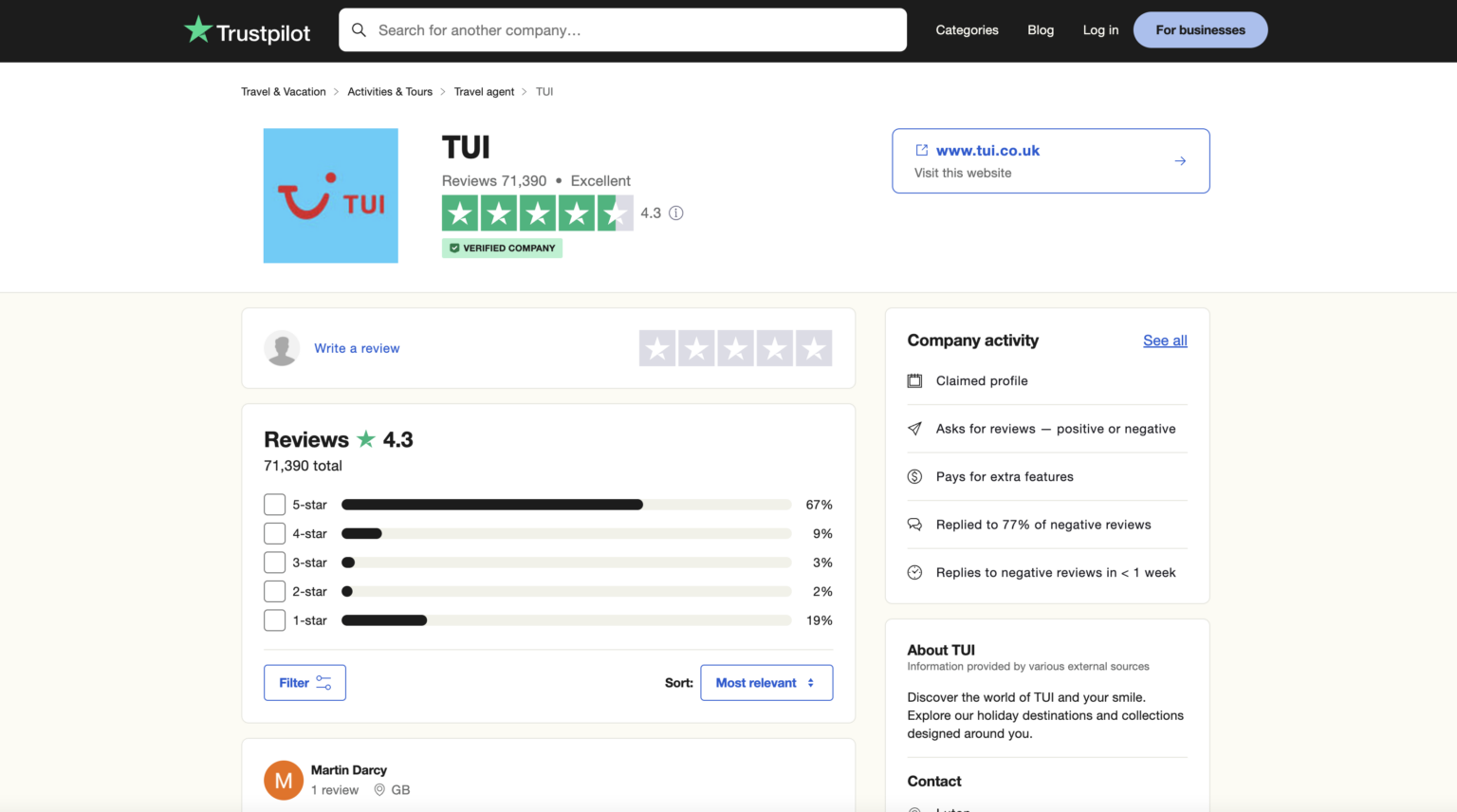
Whether you’re using a platform such as Trustpilot, Feefo or Reviews.io, you’ll have the ability to embed the latest reviews and an aggregated rating.

If your reviews and ratings aren’t as high as you’d like, take note of what customers are saying and act on it.
Positive reviews are SO important for E-E-A-T. Don’t overlook this.
Make it easy for customers to find reviews on third-party sites
There’s one thing: displaying reviews on your own site, but it’s also recommended to make sure you’re using a platform that lets customers see these on a third-party platform, showcasing they’ve been independently collected.
All three platforms mentioned above allow this, and their widgets should link to the off-site reviews.
Showcase awards, memberships, and associations
Has your brand won awards? Are you a member of industry organisations or associations?
Make sure you’re clearly showing these throughout the site, especially on prominent pages like your About Us page and homepage.
They’re great trust signals!
Leverage digital PR to get featured in the press & earn authoritative links & mentions
Digital PR plays a much more important role in demonstrating E-E-A-T than many people think, and I wrote about this extensively in a recent guide.
You see, digital PR is a tried-and-tested way to get your brand, your products, and your people featured in relevant publications your customers read.
And this comes with a wealth of benefits, including:
- Relevant links
- Referral traffic
- Awareness
- Association with top publications
To put it simply, you should be leveraging digital PR as part of your wider SEO strategy.
But what tactics should you be using as an eCommerce retailer?
Product PR – get your products featured in roundups and reviews.
Thought Leadership & Expert Insights – get your people and their knowledge and expertise featured in the press with comments, tips and industry insights
Data Studies – add value to your industry with data studies and reports, being the brand to give the commentary that people love to read about.
Need more of an introduction to the tactic? Why not check out our Digital PR Director, Amy Irvine‘s guide to what digital PR is.
Get listed as an official stockist by manufacturers
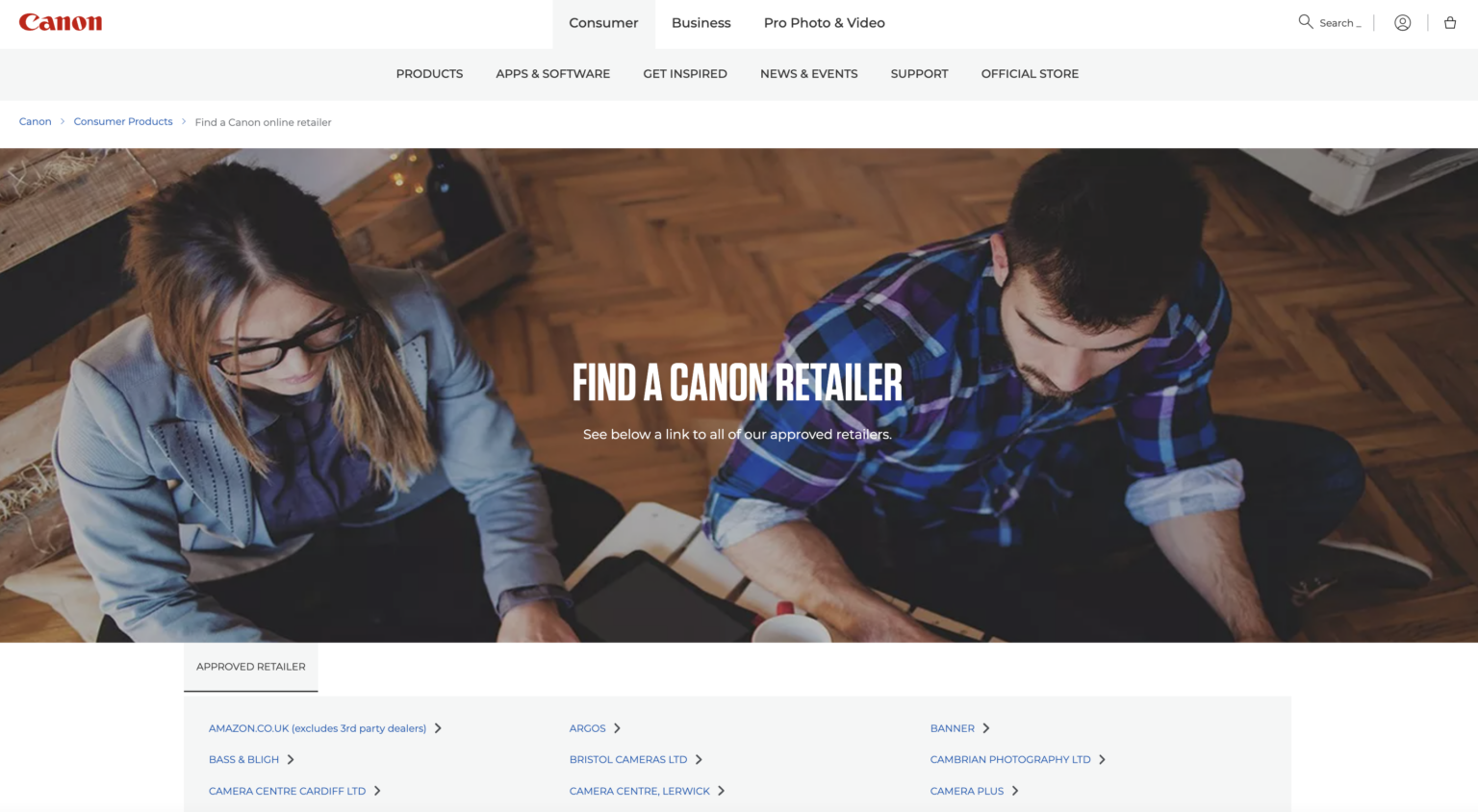
If you’re not the manufacturer of the products you sell, it’s recommended that you reach out to your supplier to ask about listing your site as an official stockist on their site.
Many manufacturers offer a “Stocklists” or “Where to Buy” page, and these are not only great links that validate that you are actually an official stockist, but also have the potential to send referral traffic through to the site.
In many cases, getting added to these pages, if you’re not on them already, is as simple as asking the question, usually via one of your buyers to their contacts.
Make sure your site has standard policies visible
You’d be amazed at how many sites don’t go to the effort of making sure they have all of the ‘standard’ policies you’d expect from a trustworthy business in place, even though some of these are a legal requirement.
Make sure you’ve got the following pages in place:
- Terms & Conditions
- Cookies Policy
- Privacy Policy
- Copyright Notice
Not having these can leave customers questioning why.
Build out an ‘In The Press’ page & use ‘As Featured In’ logos
Once you’ve been featured in the press, make sure you’re shouting about this!
There are two ways to include press coverage and the publications you’ve been in on your store.
The first is to display ‘As Featured In’ logos on your homepage and About Us page. These are the perfect places to use these logos to build trust.
The example below is from the homepage of B2B lead generation agency, Sopro. It includes a carousel animation that draws attention to the logos as users scroll down the page, enhancing their impact.

But don’t stop there.
Build out an ‘In The Press’ page and link out to all the great coverage and features of your product and brand, making it really easy to see the connections between your own site and these major publications.
It’s time to double down on E-E-A-T as an eCommerce retailer
Is your store demonstrating E-E-A-T sufficiently?
This is perhaps one of the biggest opportunities retailers have right now, and those who ignore the need to build and showcase their brands’ and people’s reputations will find it increasingly difficult to rank at the top of the SERPs.
In many ways, E-E-A-T is all about mindset. Ask yourself what builds trust amongst your customers, and there’s a very good chance the same builds trust with Google.
Focus on building trust, demonstrating your experience, expertise and authority, and you’ll be rewarded in algorithm updates; I’m sure of it.
Finding all this E-E-A-T stuff hard to digest? Digitaloft is a specialist SEO agency with over a decade of experience helping brands achieve targeted organic growth. Speak to our team of experts for tailored insights on how we could help your business win by owning the search moments that matter to you.