Last updated: 4th Oct 2026
Google Search Central Live Deep Dive Europe 2026: A Summary.
 By Liv Day, Client Partner
Get weekly SEO insights straight to your inbox.
Sign up to outranked, our weekly SEO newsletter
“The ultimate search engine would understand exactly what you mean and give you exactly what you want”.
Lino Cattaruzzi, President of Google Iberia, opened the first ever European Search Central Live Deep Dive event with this quote from Google co-founder Larry Page from 2000, reminding us that this principle remains the same – and that we’re perhaps closer to this mission today than ever before.
We also got plenty of insights and statistics into Google Search today, which provided a great antidote to the “Google is dead” crowd:
- There are over 5 trillion searches on Google annually.
- 94% of frequent LLM users are also frequent users of Google search.
- Follow-up queries on Google AI Mode have increased by around 40% each month since its launch.
Lino then somewhat terrified the audience by suggesting another abbreviation for our SEO repertoire, urging the audience to think about the idea of UEO – user engine optimisation – a tongue-in-cheek way to remind the audience of Google’s stance: people first, always.
Day 1: An introduction to crawling, search and AI
The first day of the event focused on crawling – how to make sure Google is effectively finding your content. Before we got into the technical details, Gary Illyes from Google’s Search Relations team took the audience through an update on where Google’s AI Search is today, including insights such as:
- The average AI mode search is 3x the length of a traditional query.
- 1 in 6 searches on AI Mode are multimodal (voice and image search, for example).
- Queries with 5 or more words are growing in popularity 1.5x faster than shorter queries.
As well as some really interesting insights into how people are searching in AI Mode:
- Exploring: Brainstorming queries in AI Mode have grown 30% faster than overall queries (queries starting with “where to”, “where should I”, “ideas for” etc.).
- Deciding: Searches beginning with “which” have increased 40% faster than overall queries.
- Doing: planning queries have grown 80% faster than overall queries (e.g. finding a restaurant, fitness routines, financial planning).
Incredibly interesting insights – I can see the Digitaloft SEO team running some specific keyword research and GSC analysis around some of those brainstorming and deciding queries – although my main takeaway from this section was that Google does have information about queries in AI search, they’re just not sharing them (yet).
In terms of what’s coming next: pretty tight-lipped. The upcoming feature that caught my eye the most was the ability (already beginning to roll out) for search agents to deliver timely updates and notifications – something I already do within ChatGPT. Soon, I’ll be able to ask a search agent in AI mode to let me know whenever Southampton wins a football match – I look forward to receiving a very small handful of notifications here.
Google community speaker lightning talks: Automation and AI
Next, the Google team handed over to the community speakers for the series of lightning talks – seven-minutes for speakers to deliver value, underpinned by the threat of Gary squeaking a rubber chicken at them if they went one second over the allotted time. James Powley, BlueArray’s SEO Director, gave a great whistle-stop tour of how he’s using AI to automate SEO workflows, including:
- Competitor analysis;
- Content auditing;
- Post-migration analysis;
- Creating mockups of recommendations;
all with an overall theme: humans define the strict parameters, AI completes the laborious data analysis in the middle, and then this gets passed back to the humans to draw the insights and actions.
A recap on how search works
After a (gorgeous) lunch break, we returned for insights on how search works from Gary and Cherry Prommawin, also from Google’s Search Relations team. This also included an overview of crawl errors – it seems like DNS and CDN errors are becoming more common, which is something I’ve noticed across clients, too. The Google Search Console crawl stats report is a really useful, yet underused, tool for diagnosing these.
We also heard more from the Google team about crawl budgets – something that I admittedly don’t consider too often, given the relatively small size of many of Digitaloft’s SEO clients’ sites. Crawl budget takes into account crawl rate limit (a combination of connection time, time to first byte and 429 or 5xx status codes) and crawl demand (driven by site quality, how often URLs change and how popular the site is). “Optimising” crawl budget isn’t something every SEO needs to think about, but we can reduce how much we’re burning through crawl budget by minimising errors and removing the potential for infinite URLs across a site.
What would you do? Crawling edition
What followed then was a chaotic internal head-to-head between Gary and John Mueller, who were tasked with suggesting solutions for a plethora of crawling issues, including:
- 10,000 staging site URLs suddenly appearing in Google’s index;
- The best way to get Google to recognise 500,000 simultaneous metadata updates across products;
- During a flash sale, the WAF mistakes high traffic for an attack and serves Googlebot with 429 and 503 errors, causing crawl rate to drop 90% across the domain.
One of the most interesting notes from this session was that John and Gary’s answers (many of which included “it depends”, despite an explicit ban on John uttering those words) were rarely the same. For many crawl errors (and SEO issues in general), there’s seldom one single solution. And sometimes that solution is just “sit and ride it out”.
The day wrapped up with a Q&A, in which the most pressing audience question was asked first: when are we getting more AI search insights beyond impressions in Google Search Console? Google being Google, exact details were sparse, but they said they “expect” more insights to be added to GSC in due course.
Key takeaways about AI Search and crawling from day 1
- There’s no specific Google system that’s determining if content is written by AI or a human: it doesn’t care. That said, Google’s ML systems are trained exclusively on human-written content, so it is likely to lean towards natural-sounding language.
- Make sure your site isn’t blocking Googlebot in any way – DNS and CDN errors are on the rise, so go back to basics and make sure Google is fully able to access your site.
- AI search success isn’t just visibility – that’s the end product. It’s important to look at how well agents are finding your site, recalling your brand, and retrieving your pages.
- GEO is simply good SEO (and perhaps the people who disagree with this weren’t doing “good SEO” in the first place).
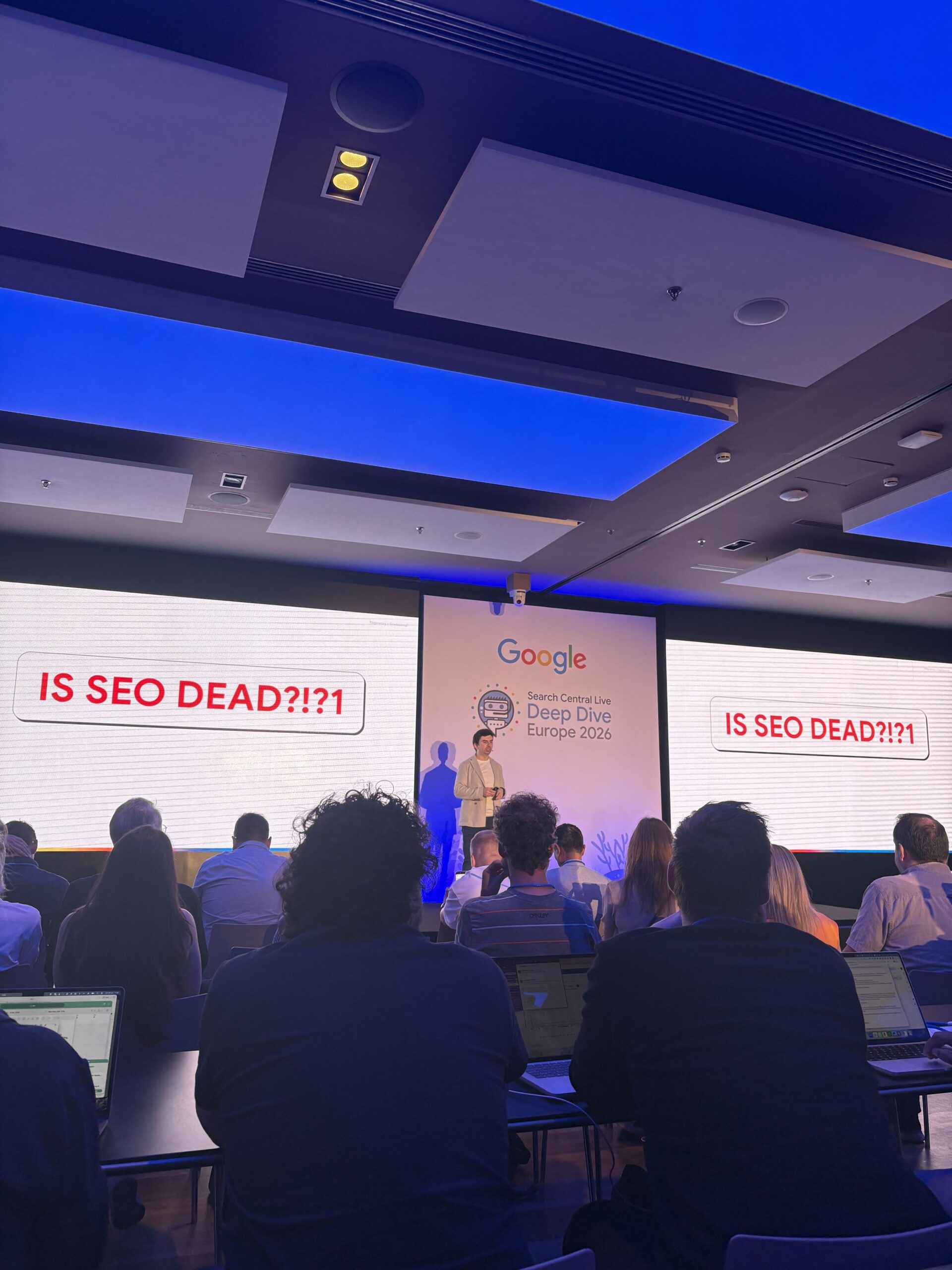
As with many Google events, the question “is SEO dead?” was tackled on multiple occasions.
Day 2 recap: Indexing, internationalisation, and JavaScript
Day two of Google’s Search Central Live Deep Dive Europe centred on indexing. The day began with a focus on how we can control it. John Mueller gave us a recap of the robots meta tags available to SEOs and developers, including some of the lesser-known tags like unavailable_after, used to indicate a date when a page should be removed from the index.
Lightning talks: Community insights on JavaScript rendering
Next up, the lightning talks from community speakers explored a range of themes around JavaScript rendering and the issues that can arise, particularly in the age of AI. There was a clear reminder that, while Google’s AI features are based on pages already within Google’s index, LLMs and other AI systems might not be. When it comes to JavaScript for AI search, server-side rendering is best practice (as we’ve been saying as SEOs for years) – particularly when it comes to asking LLMs to execute real-time queries. Complicated client-side rendering may risk your site not being included within LLM answers.
Rebecca Yu, SEO Manager at JAKALA, provided a comprehensive overview of some of the most common JavaScript errors and how to debug them. Some of the most common mistakes include:
- Including non-crawlable link markup – i.e. links that don’t use an <a> element with an href attribute.
- Client-side soft 404s.
- Content hidden behind user interaction — i.e. content that only loads after a user clicks or scrolls. Important content should be available in the rendered HTML without requiring those interactions.
- Blocked JS and API resources – these can often be blocked by robots.txt without site owners knowing!
Is structured data important for AI search?
Next, the audience’s attention turned to structured data, something which has been under the spotlight over the last few years, with people touting its benefits and uselessness for AI search performance in equal measure. Therefore, there was one big question: what is the role of structured data in the age of AI? Ryan Levering, Software Engineer at Google, filled us in that there are two schools of thought, even within Google – those who think that structured data has no use, and those who think it is the entire future. The real answer is likely something in the middle.
Structured data gives us:
- Additional precision – structured data can express information in machine-readable formats, such as a full ISO date, while accurately reflecting the content users can see;
- Efficiency – using parseable structured data is significantly cheaper and more efficient than relying on LLMs;
- Focus – it explicitly calls out the most important information on a page, reducing noise.
Ryan reinforced the value of structured data by presenting a case study from Rakuten Recipes – an older example from Google’s Developer Documents, but one that’s still relevant nonetheless. After implementing recipe structured data, Rakuten Recipes saw a 2.7x increase in traffic from search engines and a 1.5x increase in session duration.
He also answered another common question: there’s no limit to the amount of structured data you can have on a page. Google will never penalise you for having too much structured data – but going too in-depth isn’t likely to be the best use of your time. He highlighted Google’s gallery of structured data types, which is the recommended way to identify the best schema markup for your site, and that JSON-LD is the recommended format for this (though other formats are valid, too).
A couple of structured data best practices to be aware of:
- Avoid conflicting or redundant structured data;
- Keep the structured data relevant;
- Try to use unique identifiers.
We also recapped on the latest updates to structured data:
- Shopping updates – more updates to align with merchant feeds. There’ll be better support for sale price control with valid dates.
- Schema.org updates – there are now usage statistics for each structured data property, which can be helpful for decision-making.
Image and video best practices for SEO
Next up, Gary returned to the stage to walk the audience through best practices for images and video within search – something that’s likely to become even more important with the increase in multimodal search we discussed on day one.
When it came to videos, in particular, there were some interesting takeaways.
- The format is important – MP4 is still the recommended format for videos, though others are still supported.
- Embed videos prominently on the page, ideally above the fold – otherwise they’re a lot less likely to be discovered.
- Create video sitemaps – include <video:video> tags with relevant information, such as title, description and thumbnail.
- Provide descriptive surrounding text – this provides really valuable context.
- Consider video hosting platforms, such as YouTube or Vimeo – they’re the experts for a reason! (And no, there’s no specific benefit to using YouTube, just because it’s a Google product).
- Promote your videos – via social media and other forums. This makes them easier to discover.
International SEO best practices
Following some more lightning talks from the community, Cherry took a deep dive into internationalisation for SEO. She ran through best practice across both internationalisation and geotargeting, along with some of the most common mistakes: incorrect language or region codes in hreflang (UK instead of GB), or even specifying regions without language (such as gb, rather than en-gb).
During indexing, Google uses the page’s content to determine a page’s language – not the HTML, and not the hreflang. Therefore, the language of a page needs to be clear and obvious.
We also learnt about the important elements to consider when localising content:
- Translation
- Local conventions – e.g. how dates are written
- Cultural differences – e.g. users in different countries will have different priorities when shopping, with some favouring cost, while others rely on user reviews, quality or transparent sourcing
International SEO consultant, Alizee Baudez, then followed up with another lightning talk, with some really interesting insights on international SEO from a furniture retailer. She highlighted case studies from when a simple translation simply isn’t enough – with a particular example from a furniture brand catching my attention. The difference between French homes (often larger, detached buildings) and Dutch homes (often narrow houses with more storeys) meant there was a huge logistical difference between what furniture was being sold.
We saw something similar at Digitaloft while working with Dutch curtains and blinds retailer 123Jaloezie and its sister brand in the UK, MakeMyBlinds. The categories couldn’t be carried across like-for-like due to cultural differences – there were certain products in the UK that simply didn’t exist in the Netherlands. The demand just wasn’t there. And vice versa – in the Netherlands, there was a huge demand for insect screens for windows, but this was a category the UK market had no appetite for.
Signal extraction and deciding what goes in the index
Following some fantastic poster sessions from more community speakers – I spent some time listening to Sabine’s case study of getting stakeholders involved in complex site migrations – Gary kicked off the final session by talking about the final stages of the crawling process: signal extraction and deciding what goes in the index.
This talk included an analysis of every SEO’s Search Console nemeses: “Discovered – currently not indexed” and “Crawled – currently not indexed”. Gary highlighted that “Discovered – currently not indexed” can occur when Google postpones crawling to avoid overloading a site. However, the status alone doesn’t tell us the cause, so it needs to be considered alongside the site’s crawl activity and wider indexing patterns.
What would you do: indexing edition
Following some more lightning talks, everyone’s favourite gameshow returned for a second episode. This time, “What Would You Do” focused on indexing (of course), with questions including:
Q: You want your pages immediately (!!!!) out of Search. What do you do?
A: Use the GSC removal tool, then fix the underlying problem
Q: You have a three-long canonical chain, involving the main URL and two parameter URLs. Google drops all canonical hints and picks random URLs. What do you do?
A: Identify the extent of the problem; use robots.txt to block crawling of parameter URLs
Q: Google is rewriting 80% of your title tags on SERPs, replacing them with generic H2 headers or your site domain name, dropping organic CTR by 25%. What do you do?
A: Review titles and improve
Q: Your product is out of stock but will be restocked in two weeks. What do you do?
A: Keep 200 OK + Schema OutOfStock
Trends in Google Trends
But Search Central Live Deep Dive isn’t just about what’s on the SERPs. We also got to hear from some of the experts from Google’s other products – including Omri Weisman, Engineering Manager at Google Trends. He highlighted two particularly useful applications for SEOs and digital PR teams:
- Emerging trends and developing search terms – the Trending Now page is fresh enough to show things that have been trending in the last ten minutes. This makes it great for reactive digital PR.
- The best time to publish content – I’ve used this for some of our clients at Digitaloft, where we’ve interestingly found their seasonal peak getting earlier and earlier every year
Next, Omri filled us in on some of the newest features within Google Trends:
- Suggest search terms – a Gemini-powered sidebar that suggests the most popular search terms related to a particular topic, which can be great de
- Quick comparison – the ability to see MoM, YoY and WoW comparisons for a single keyword
- Maps and geo – including a sub-region breakdown within the map function
- Category filter – re-introduced, with the ability to filter by specific intent or other category.
Key takeaways about indexing from day 2
- JavaScript accessibility matters for AI visibility. Google’s AI features draw on its index, but other AI systems may access content differently. Server-side rendering helps make content accessible; check for non-crawlable links, soft 404s, blocked resources and content that only loads after interaction.
- Structured data still has value, even as its role in AI evolves. It provides precise, explicit information that machines can process efficiently. Prioritise relevant Google-supported types, use JSON-LD and unique identifiers, and avoid conflicting markup. More markup isn’t automatically more useful.
- International SEO needs localisation beyond translation. Product demand, shopping priorities and local conventions differ between markets. Google determines language from page content; hreflang needs valid language and region codes, such as en-GB.
- Use practical fixes for common search issues. For urgent removals, use the GSC removal tool and address the underlying cause. Keep temporarily unavailable products live with a 200 response and OutOfStock markup. Review titles when Google repeatedly rewrites them.
Day 3 recap: ranking, Search Console, and performance
The third and final day of the Search Central Live Deep Dive Europe focused on the end of the search journey – ranking and performance. This was likely to be the most anticipated day, the Google team having deferred a lot of the more juicy audience questions (including multiple cries from myself about when Google Search Console is getting a dark mode) to this final day.
Understanding search queries
First up, John Mueller gave a deep dive into how Google understands users’ queries, walking the audience through Search’s step-by-step process.
- First, the language is detected;
- Then, any stopwords are cleaned up – so [a photo of some fried chicken];
- Any entities are identified and extracted – i.e. fried chicken
- Then, importantly, the query is expanded. John pointed out that this isn’t too different to the query fan-out that everyone talks about with AI. Google’s synonym system is one of the most important parts of its ranking systems. We also learned about siblings – words that aren’t synonyms but are commonly searched together or serve similar roles. These get pulled from real [X vs Y] queries.
John also gave insight into how Google views diacritics – somewhat fitting for someone’s surname who is interchangeably spelt Mueller and Müller across the internet. Overall, terms with and without accents or umlauts are seen as interchangeable, so you don’t need to employ any particular strategy here. Overall, John’s tips were:
- Write in the users’ language.
- Check terms that are not well known – so explain or elaborate on less well-known entities.
- Don’t overthink it!
How Google thinks about search quality
After another round of lightning talks, Duy Nguyen, a Google Search Quality Analyst, highlighted the role Google plays in continually evaluating and updating search. In 2023, there were 719,326 search quality tests and 4,781 launches.
There was a focus on creating non-commodity content – in-depth information that isn’t just common knowledge and provides unique insights.
We reflected on the most recent updates to Google’s Spam Policy – tackling back button hijacking, scaled content abuse, and manipulating AI responses. Anything intended to manipulate AI responses is considered Spam. And yes, they do actually read all the spam reports people send in. As well as deal with the 40 billion spam pages that appear every day.
Uncovering trustworthy experiences on Google Discover
Next, Eric Murillo, a Trust & Safety Analyst from Discover, provided a deep dive into the personalised visual feeds we find on Google’s mobile apps.
Discover relies entirely on the standard Google Search crawling and indexing – there’s no separate DiscoverBot. Recommendation within Discover begins with eligibility – anything harmful or dangerous, or of a low quality, is automatically filtered out.
Visibility and recommendation within Discover depends on a number of factors, with guidance including:
- Ads or sponsored content should not exceed or impede users’ ability to read the page’s content.
- Preview content should not mislead users by promising details which aren’t in the full body of content.
- Content should be transparent, including information about authors, the publication and the publisher.
- E-E-A-T plays a crucial role in recommendation – untrustworthy pages will have low E-E-A-T, no matter how experienced, expert or authoritative they may seem.
- Image quality and size is also vital – images should be large and high-res – 1,200px wide, 300,00+ total pixels, 16×9 aspect, with a max-image-preview:large meta tag. Images should not be text-heavy or generic (e.g. company logos).
Finally, the team rounded off the morning’s talks by reflecting on every SEO’s favourite topic: algorithm updates. No word on any new updates coming (at the time of writing, Google is still rolling out the September 2026 Spam Update). Google’s advice on the topic was pretty simple: if you’ve suffered in a Core Update, take a close look at your site as a whole, and try to be objective. Check if your site overall (not just individual pages) is delivering content that is actually helpful, reliable and people-first. It can often be a good idea to get someone objective to critically look at your site for you.
Shopping on Search: beyond the blue links
After our final lunch of the conference, the attention turned to Organic Shopping – an area of search that likely wouldn’t have garnered as much attention in previous years, but is increasingly forming a major part of ecommerce SEO strategies. Alex Jansen, another of Google’s Software Engineers, reflected on the recent introduction of conversational attributes to shopping – product information that helps users and their agents discover rich product information across AI-driven surfaces, like AI Mode.
There are now the following conversational attributes available as part of the Google Merchant Center product data specification:
- [question_and_answer]
- [document_link]
- [related_product]
- [item_group_title]
- [variant_option]
- [popularity_rank]
Alex gave the illustration of a series of Q&A for a kettle – answering questions like “What are the temperature settings for this kettle?” directly within the product feed.
Overall, rich, lightly-structured information is critical to AI systems, as well as the existing specific, highly-structured data. The bar for data quality has also risen – to help users and their agents confidently go through their shopping journeys, and web markup provides an efficient, unambiguous way to share that data.
What’s new in Google Search Console?
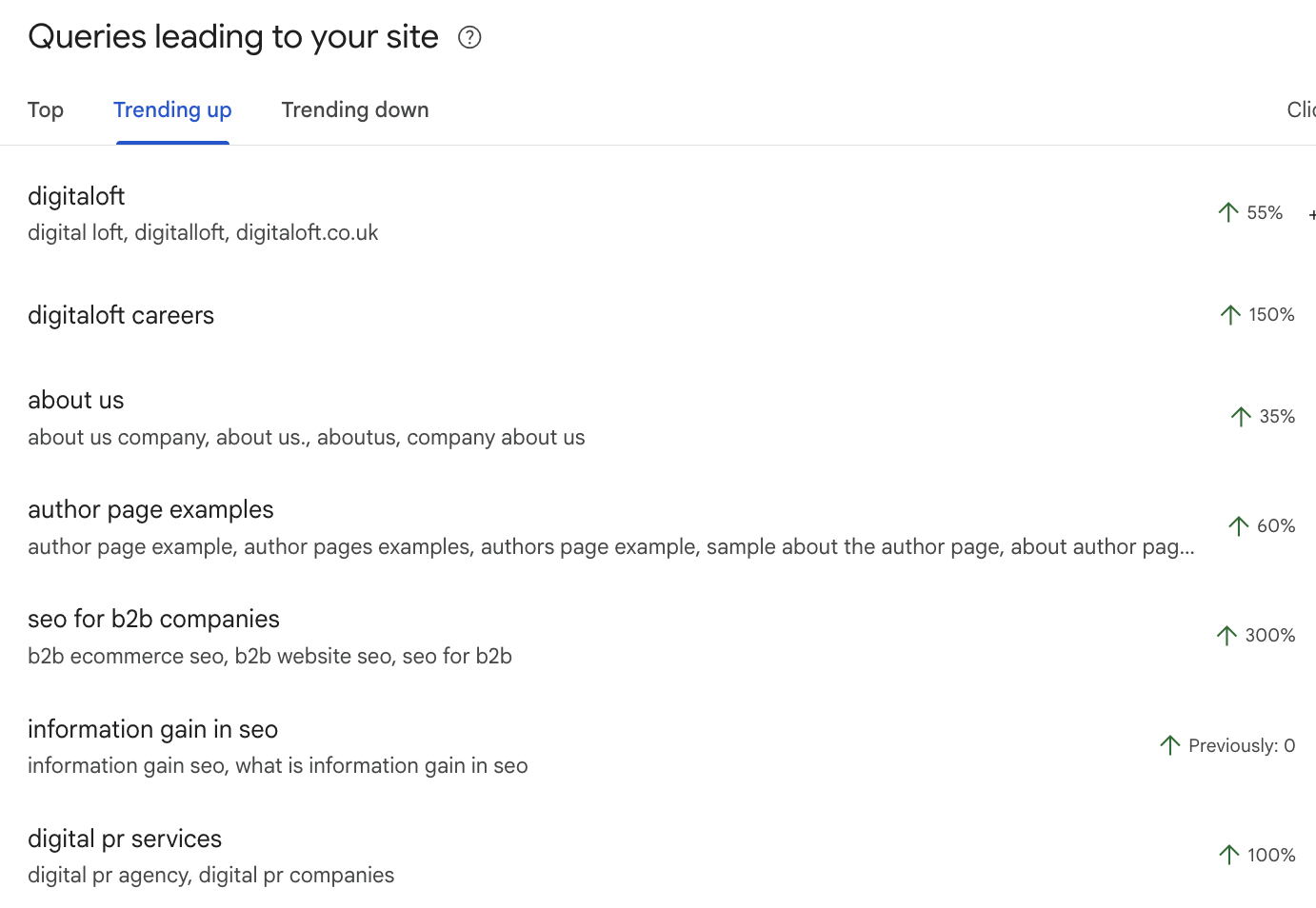
From one Google product to another, the next talk focused on Google Search Console. Ariel Kroszynski, GSC’s Front-End Engineering Manager, recapped the latest updates to the platform – including tracking social performance as well as the introduction of query groups to the Insight report in October 2025 – a section within GSC’s Insights report that I personally don’t use nearly enough! This view allows you to view the trending query groups for your brand – incredibly helpful if (like us) you have a brand that people tend to misspell!
On the topic of generative AI, specifically the GSC Generative AI report, Ariel said “I expect this to get more in depth”, but (of course) with little detail on the specifics. So watch this space.
And hot off the press was a discussion about Google Search Console’s latest addition – multimodal search reporting. This allows users to view traffic on searches made with:
- Google Lens;
- Circle to Search on Android;
- Image uploads to Google Search;
- Chrome right-click “Search this image” feature.
And then finally, Ariel gave me a minor heart attack with a slide titled “Dark Mode”, following my question earlier in the day. However, the mockup on screen was just that: a mockup. But Ariel reiterated that the Google team is continually listening to their audience, and it may come soon.
Next came the final set of lightning talks, focusing on the subject of understanding SERPs and your users. I loved Simon Vreeman’s analogy of likening a seven-second page load speed to a shop door that doesn’t open for seven seconds. Some C-suite execs can fall into the trap of deprioritising digital experience, so giving this real-world example is a really clever way of getting recommendations moved up a dev queue. This was just one of many analogies that proved a clear point – that CRO is an integral part of SEO, and vice versa. I personally love incorporating insights from heatmapping tools like Microsoft Clarity or Hotjar into my SEO recommendations, which was another tip from Simon’s talk, along with simply asking your users about any friction in their journey.
Within the same set of lightning talks, Alex Wright, MD of Earned and Owned Media at iDHL discussed a topic that most SEOs will recognise all too well – analysing site performance when clicks are down across the board. He made a really insightful point – that we’ve spent years reporting on a metric that no longer stands the test of time (and perhaps was never the right metric to report on in the first place). To illustrate the point further, he referred to a case study where search clicks were down 65%, but enquiries were up 17% – something that surely no CEO would turn their nose up at. Another key section of his talk was on recognising the entire search ecosystem, particularly in this age of AI. Alex illustrated his point with a further case study: an AI visibility project that had a perhaps unexpected side effect – a 36% increase in paid search CTR, likely as a result of increased brand awareness. Alex’s talk was a vital argument against running an SEO strategy in a silo, instead arguing that search should be viewed more holistically.
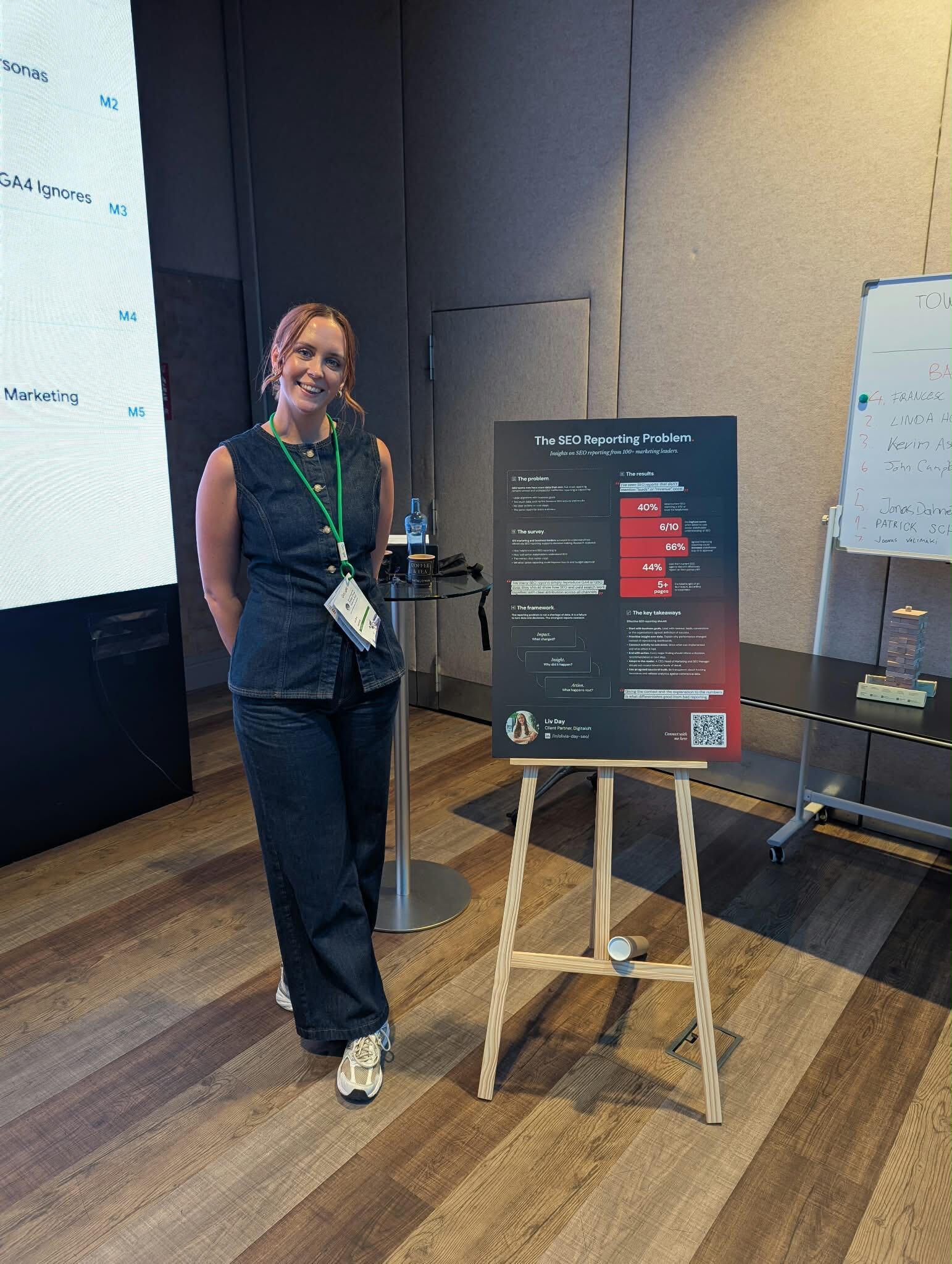
Rounding off the day, we had some more poster sessions, including my own session on insights on SEO reporting from 100+ marketing leaders. As a presenter, I really enjoyed this format, which consisted of around 45 minutes of non-stop questions and discussions with other attendees, giving rise to some really insightful discussions. I didn’t get time to check out all of the other posters, but particularly enjoyed chatting with Victoria Yap about her personal experiences of SEO hiring, and the fine line between AI automation and the invaluable role of human judgement in SEO. Her poster provided a really practical framework for selling yourself, by highlighting what can be automated, what can be augmented, and what needs to be person-led.
Mastering the messy middle
Rounding off the conference with the final set of talks, Pablo Pérez, Senior Marketing Research and Insights Manager at Google, dived into Google’s well-known “messy middle” and how AI is changing the way humans are making decisions.
We know users are taking to AI in the earliest moments of their purchase journey to explore, compare and research. This includes both LLMs and Google’s AI features – search demand for “is [brand] legit” has been on the rise since 2020, and hit its highest point in 2026. This feels like a clear indication of consumers’ headspaces right now, and why the trust element of E-E-A-T is more important than ever.
How long does it take to…?
Another highlight came from Gary Illyes’s final talk of the conference, in which he gave brand-new data on the typical time for Google to discover, crawl and index pages – something that site owners have wanted to know.
According to the timings Gary shared, URL discovery averages around 20 hours, while URL refreshing generally takes around 30 days, with considerable variation between sites and URLs. Sitemap updates are typically recognised within 24 hours, although processing can take longer and doesn’t guarantee crawling or indexing. Robots.txt updates are also usually recognised within around 24 hours.
On the indexing side, Gary described rendering as typically taking a few hours, although delays can extend to days or weeks. The indicative window for recognising structured data updates ranged from a few hours to one or two weeks, while processing a site move was generally put at one to three months. Again, the actual timing depends on the site and circumstances.
The final timing insights related to serving. Gary indicated that requests through the URL removal tool often take effect within around two hours, with around 24 hours given as the longer end of the typical window. He also shared an indicative window of one to six weeks for the manual-action review process. Neither should be treated as a guaranteed turnaround, and submitting a reconsideration request doesn’t guarantee that a manual action will be lifted.
The conference wrapped up with a very affirming trio of messages:
- You should use AI. It can make life 10x easier by speeding up workflows and helping with content, website and customer management.
- Use AI responsibly. It hallucinates – and be careful you’re not just adding to the slew of AI slop already on the internet (the phrase ‘AI slop’ was used a lot by the Google team over the three days).
- AI on Google is just SEO. Google Search’s AI features follow the same processes and systems as traditional results. It likely doesn’t need a new acronym.
Key takeaways about serving from day 3
- Google understands concepts beyond exact keywords. Query expansion, synonyms and related terms help Google interpret intent. Write naturally in your audience’s language and explain unfamiliar concepts.
- Original insight is a key content priority. Focus on useful, in-depth information that adds something beyond common knowledge or repeats of existing content.
- Product data needs to answer shoppers’ questions. Rich information, including product Q&A, documentation and relationships between products, can help users and AI agents make confident purchasing decisions.
- Crawling and indexing take time. The timings shared ranged from hours to months depending on the process. Use them to guide expectations, rather than treating them as guaranteed deadlines.
- Use AI to improve workflows, with human oversight. Check accuracy and preserve originality. The closing message was that visibility in Google’s AI features still rests on established SEO foundations.
An overall summary of Google Search Central Live Deep Dive Europe
Across three days, there was a lot to take in – from the technical details of crawling and indexing to how AI is changing the way people search and shop. My biggest takeaway was how often the conversation came back to understanding your users, making your content accessible, and giving people something useful that they can trust. There’s plenty changing in search, but those principles still give us a clear direction.
I also particularly enjoyed the conversations around measurement. Hearing examples of falling clicks alongside growing enquiries reinforced something I’ve been talking about for a while: we need to get better at explaining the value of SEO in terms that matter to the businesses we work with.
Beyond the talks, so much of the value came from the people. I had some fantastic conversations with other SEOs about the challenges we’re facing, the things we’re trying, and what’s actually working. The poster sessions were a particularly valuable part of that, giving us the chance to properly discuss ideas rather than just listen to them.
Overall, this was an incredibly well-organised event, with high-quality talks from people working across the search ecosystem. I’m leaving with plenty to share with the Digitaloft team, a few things to rethink, and an ongoing campaign for Google Search Console dark mode.
This one will be tough to beat!