Last updated: 21st Aug 2026
The Digital PR Summit 2026: Key takeaways and expert insights from every session.
 By James Brockbank, Managing Director & Founder
Get weekly SEO insights straight to your inbox.
Sign up to outranked, our weekly SEO newsletter
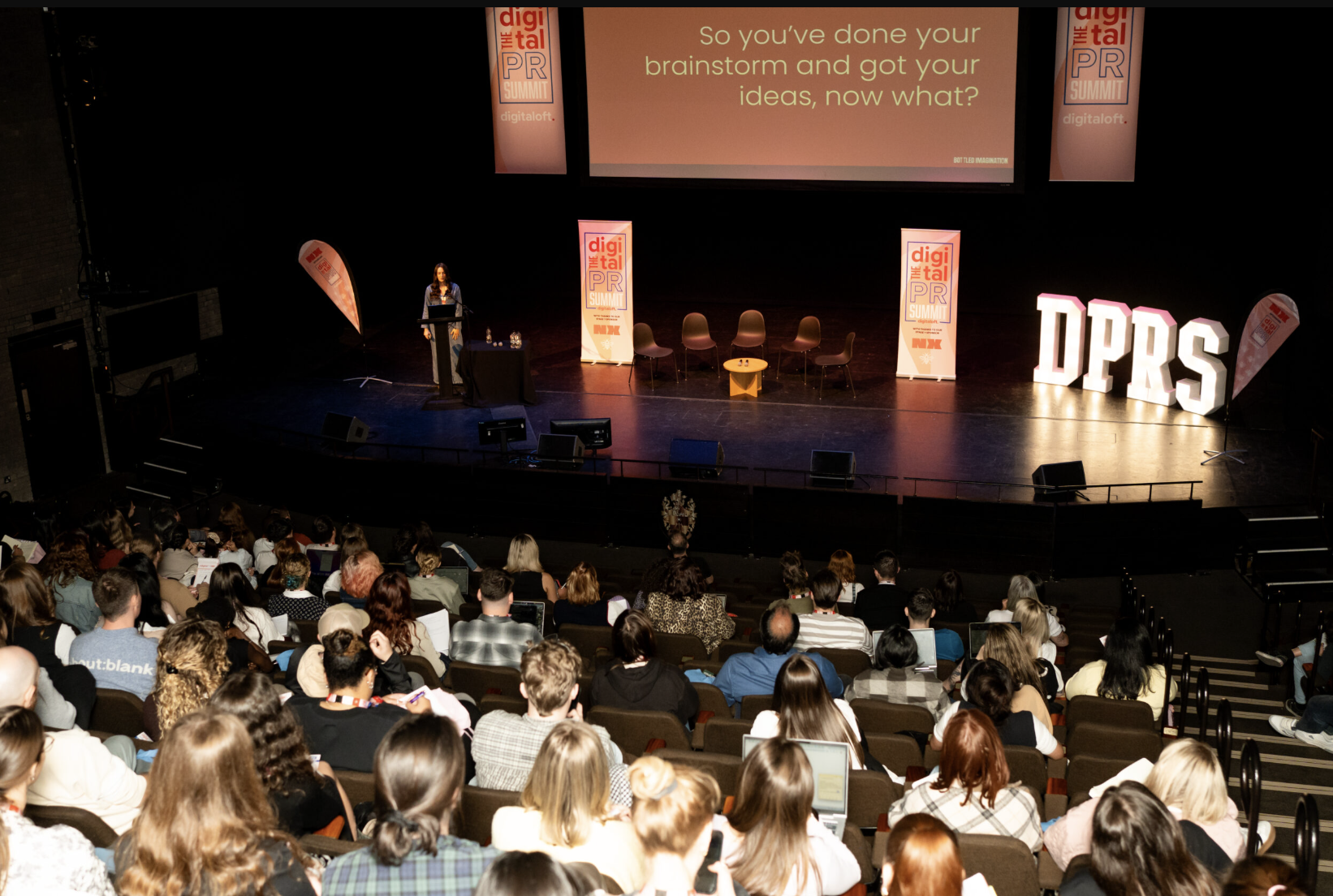
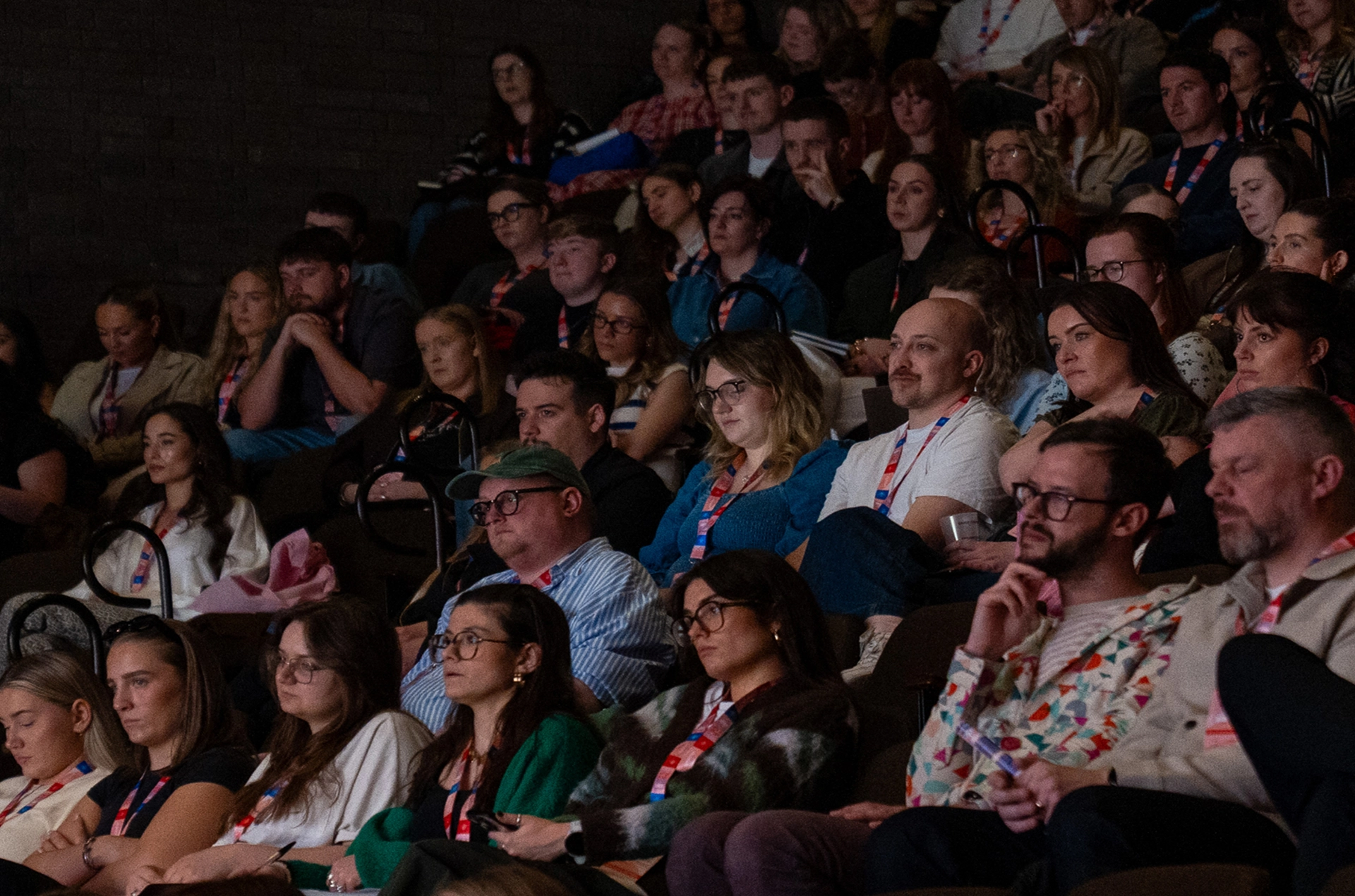
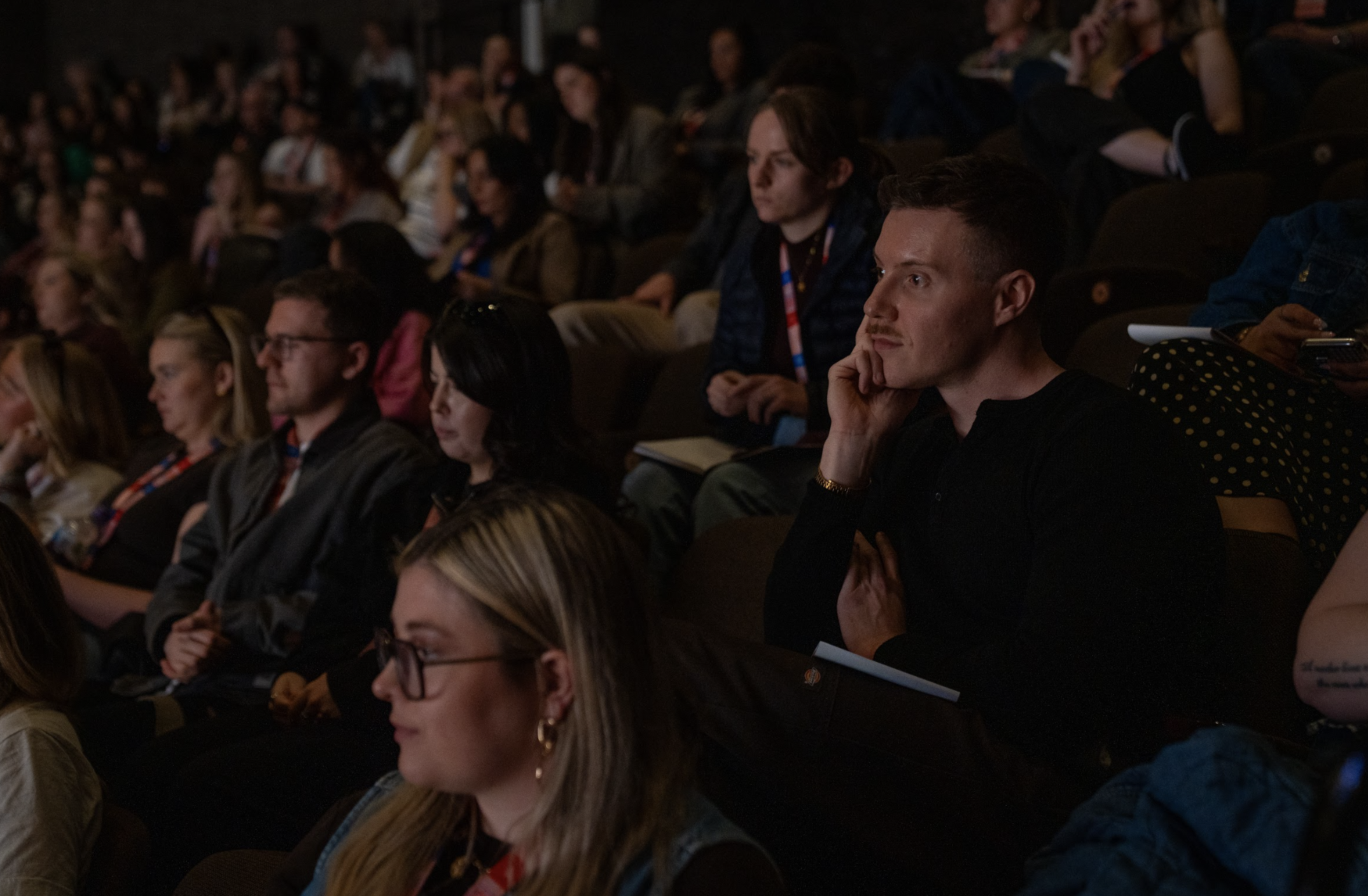
30+ talks. Two stages. 500+ attendees. Over 10 hours of insight from the people shaping SEO and digital PR right now.
Across a full day of sessions and panel discussions, world-class speakers shared more than tactics and top tips. They challenged assumptions that have long defined how we operate – assumptions about links, about scale, and about what success itself actually looks like.
Because the reality is, digital PR hasn’t lost its value. Far from it, in fact. The reality is that the gap between what works now and what teams are doing is getting wider.
Here, we recap the Digital PR Summit for anyone who couldn’t make it in person, sharing key insights from each of the day’s sessions and expert reflections from Digitaloft’s own team on what you need to prioritise in 2026 to make your digital PR and SEO deliver.
The Summit in 30 seconds: Our top takeaways from the day
- Relevance beats reach: Sending fewer, better-targeted pitches will outperform mass outreach every time and protect your reputation with journalists.
- Brand mentions are closing the gap on links: Especially in AI search, being referenced matters just as much (if not more) than being linked.
- Product PR is now a search strategy: Listicles and round-ups are feeding AI Overviews and LLM recommendations. If you’re not included, you’re not visible.
- Subject lines decide everything: If an email doesn’t even get opened, nothing else matters, so double down on deliverability, knowing that clarity, specificity, and personalisation win.
- “Increasing awareness” is not a strategy: Vague objectives lead to vague reporting. Measurement needs to reflect real engagement and bottom-line business impact.
- AI raises the bar, but it doesn’t replace PRs: LLMs and AI tools can streamline workflows, but originality, credibility, and human insight are still what land coverage.
- International PR fails without cultural context: Translating a campaign isn’t enough – you need to translate its meaning and tap into geo-specific cultural nuances that pique local journalists’ interest.
- Consistency builds brand authority (and AI confidence): Mixed messaging across channels weakens how both people and machines understand your brand.
- People drive trust more than brands: Audiences are engaging with individuals – leaders, experts, creators – not faceless companies (just make sure your experts are legit).
- Digital PR needs to be treated as a major growth driver: Its impact spans search, social, brand, and AI visibility. Treating digital PR in isolation is where most teams go wrong.
The Art of Disruption
Mark Perkins | Founder, Mark Perkins Creative Consultancy
Most campaigns fail for a simple reason: they look like everything else.
Mark Perkins’ session cut through the idea that “big” equals impactful. The campaigns that land aren’t the loudest…they’re the ones that feel different. That difference often comes from using what’s already around you, grounding ideas in something real, and presenting them in a way that stops people mid-scroll.
There’s also a tendency in digital PR to overcomplicate ideas. More data, more layers, more justification. In reality, the strongest campaigns are often the simplest. Clear idea, strong execution, immediate understanding.
Visuals play a key role here. If you can make an idea tangible – something people can see, not just read – you massively increase your chances of coverage.
What this means in practice:
- Stop chasing complexity, and focus on clarity
- Build ideas around emotional or human truths
- Think about how the idea looks, not just how it reads
- Use constraints as a creative advantage
Product PR: The Most Cost-Effective Digital PR Tactic You’re Not Using
Amy Gibson | Strategy Director, Digitaloft
If you’re still treating product PR as a niche tactic, it’s time to reassess your strategy, because it’s fast becoming a core part of how brands show up in search.
Amy Gibson highlighted a major shift: AI Overviews and LLMs are pulling heavily from listicles and product round-ups. That means visibility isn’t just about ranking, it’s about being included.
If your brand isn’t part of those curated lists, you’re invisible in a growing number of search journeys.
What’s changed is accessibility. You don’t need physical products or large budgets. You need strategic placement.
This also opens up a new competitive layer – tracking where competitors are being referenced, not just where they rank.
What Amy’s expertise means in practice:
- Map where your competitors are appearing in list-based content
- Treat product PR as a visibility channel, not a side tactic
- Focus on inclusion in high-trust, frequently updated content
- Understand that “being recommended” is the new battleground
31 Million Emails Don’t Lie: Why Hyper-Relevance Wins in Digital PR
Vince Nero | Director of Content Marketing, BuzzStream
We’re sending more emails than ever…and getting less coverage.
And that’s not just a hunch or perception. It’s a pattern backed by data.
Across the industry, outreach volume is climbing, but response rates are heading in the opposite direction. And it’s forcing a harder question: if effort is increasing, why aren’t results following?
Vince Nero’s answer was simple. The issue isn’t effort, it’s relevance.
Most outreach still operates at a surface level. A general topic match. A broad publication fit. That might have worked when inboxes were quieter, but it doesn’t now.
Journalists are receiving more pitches than ever, and filtering faster than ever. Anything that doesn’t immediately feel specific, timely, and genuinely relevant gets ignored.
True relevance goes deeper. It’s about understanding what a journalist is covering right now, how their focus has shifted, and what they actually care about, not just what they’ve written in the past.
And that takes time.
The alternative, mass outreach, is quicker, sure…but it damages relationships. Every irrelevant pitch chips away at trust, and once that’s gone, it’s very hard (if not impossible) to win back.
What this means in practice for PRs:
- Spend more time researching than sending
- Treat media lists as a strategic asset
- Prioritise long-term relationships over short-term output
The In-House Buy-In Problem: Why SEOs Struggle to Sell Digital PR (and How to Fix It)
Naomi Francis-Parker | SEO Manager, Deliveroo
Naomi Francis-Parker focused on a familiar challenge: PR struggling to secure internal support and buy-in, especially from SEO teams and wider stakeholders.
But, as she explored in her session, the issue isn’t a lack of value. It’s a lack of clarity.
When digital PR is framed around campaigns, coverage, and links, it feels disconnected from performance. Easier to question. Easier to deprioritise.
And that’s a positioning problem, plain and simple, because digital PR directly supports what the business actually cares about – search visibility, authority, demand, and revenue generation. The real challenge is making that connection obvious.
That means shifting the conversation.
Naomi invited us to start with what the business wants to achieve, then show how PR contributes. Not as a standalone channel, but as part of a wider growth strategy.
In short, the clearer the link, the easier it is to secure buy-in.
What this means in practice:
- Position digital PR around outcomes, not outputs
- Align PR activity with SEO and commercial goals
- Translate PR value into a language that stakeholders understand
How to Build Effective Brand Mentions for AI Search (What the Data Says)
Ryan Law | Director of Content Marketing, Ahrefs
Ryan Law’s session focused on a shift that’s already underway: visibility in AI search is being shaped less by links and more by brand mentions.
The data shared showed that the sources referenced across AI tools rarely overlap. In other words, showing up in one place doesn’t guarantee visibility elsewhere. Coverage needs to be broader, more distributed, and more consistent.
That’s a big shift from traditional SEO thinking, where rankings were the primary goal.
There was also a clear signal around formats and mediums, with Ryan highlighting that YouTube, in particular, shows a strong correlation with AI visibility. The way video content is structured, with transcripts, clear topics, and depth, makes it highly usable for AI models.
And that creates a new dynamic.
For Ryan, we shouldn’t be working to earn links or placements. We need to be focusing on being referenced, understood, and associated with the right topics across multiple environments,
The upshot is that digital PR isn’t just about influencing search rankings anymore. It’s shaping how brands are interpreted by AI and how they surface in results generated by AI answer engines.
What this means in practice:
- Build brand presence across multiple platforms, not just one
- Focus on being referenced and cited, not just linked
- Invest in formats AI can easily interpret, like video
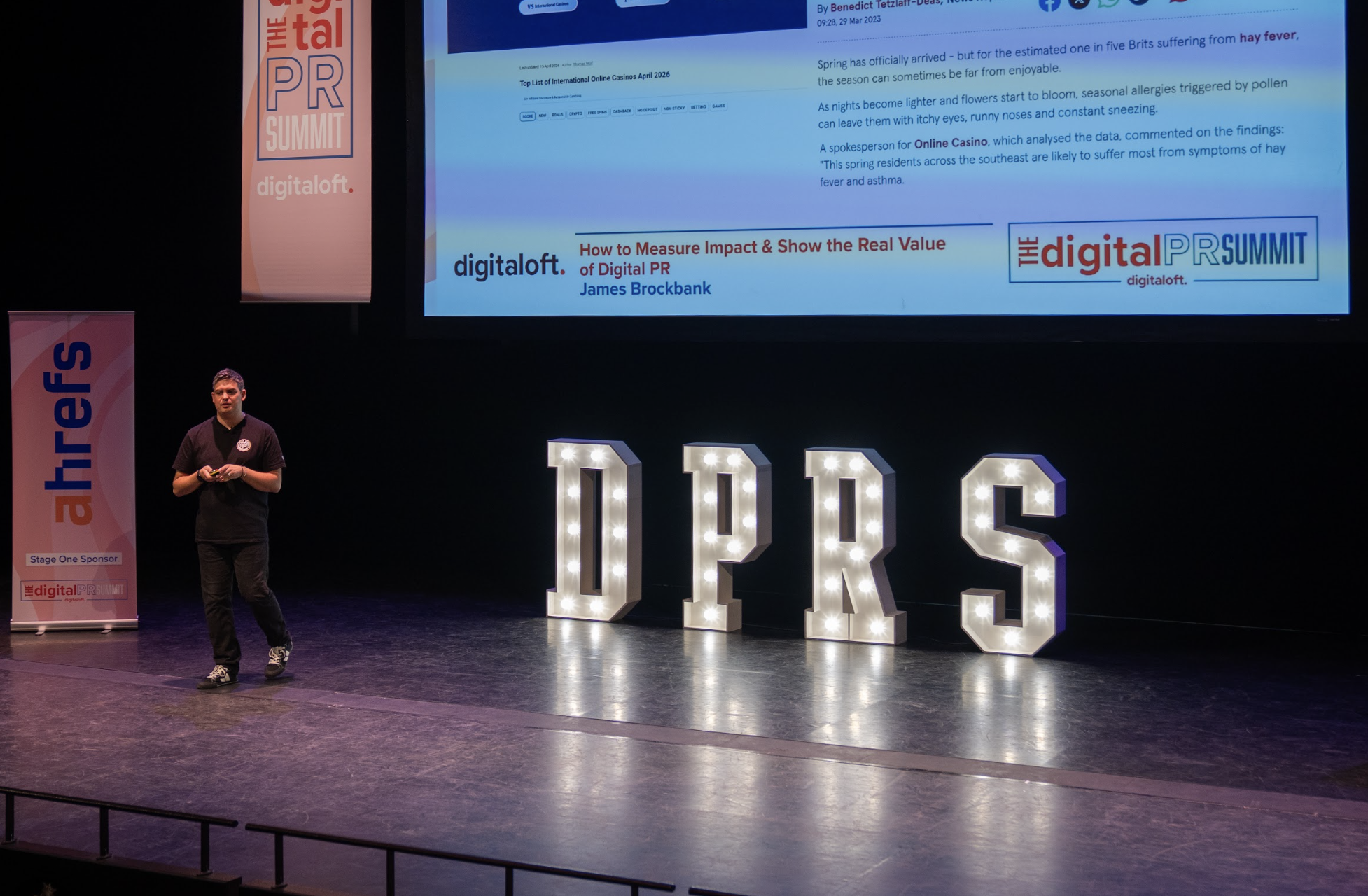
How to Measure Impact & Show the Real Value of Digital PR
James Brockbank | Managing Director & Founder, Digitaloft
James tackled one of the biggest challenges in digital PR – proving its value.
As James highlighted, most reporting still focuses on outputs. Links, coverage, domain metrics. These insights are useful, yes, but they don’t show what actually changed or how digital PR has impacted a business’s bottom line.
And that’s a problem.
Digital PR outputs don’t equal outcomes, and until that gap is closed, it’s always going to be harder to justify investment.
The shift starts with focus.
PR teams own the activity, but they influence what the business actually cares about – rankings, traffic quality, and (most importantly) revenue. Measurement needs to reflect that if it’s going to speak the language of the C-suite.
James encouraged teams to work backwards from commercial goals. What does the business want to sell more of? Which pages drive that revenue? And what’s holding them back?
In most cases, the gap comes down to authority, relevance, or volume. If you don’t know which you’re trying to improve, you can’t prove impact. From there, it becomes much clearer. Digital PR isn’t just generating coverage – it’s supporting visibility in the search moments that matter most.
The strongest proof of this comes from isolation and comparison. Look at the performance of pages supported by PR activity against those that weren’t. If they outperform, you have a much stronger case for impact.
In practice, James’ insights tell us to:
- Move beyond reporting outputs in isolation by tying everything back to sales and revenue
- Align PR activity to revenue-driving pages
- Define the gap you’re trying to close
- Measure across business, search, and PR layers
- Prove impact by isolating performance and comparing
Why Leaders Are the Future of Brands
Ash Jones | Founder, Great Influence
Ash’s session focused on a shift that’s becoming harder to ignore – people trust people more than they trust brands. It’s an uncomfortable truth, but it does make sense.
People signal authenticity and relatability, while brands are abstract entities we associate with having commercial motivations.
This is why the most successful companies aren’t just investing in campaigns. They’re investing in the people behind them. Leaders, founders, and subject matter experts are becoming the voice of the brand.
Because that’s exactly what audiences are connecting with.
As Ash put it, most brands are producing content that’s forgettable. Safe, generic, and easy to ignore. And in a world where attention is limited (and spread thinner than ever), that simply doesn’t cut through.
The brands seeing the most traction are doing the opposite. They’re showing up with a clear point of view, led by real people, saying something worth paying attention to.
There’s also a clear commercial impact, as people are more likely to buy from brands whose leaders they follow. More likely to engage when there’s a human behind the message. More likely to trust what’s being said.
Here’s what this means in practice:
- Invest in building visible voices within your business
- Create content people actually care about
- Avoid generic, templated messaging
- Focus on authenticity over replication
- Share expert-led commentary, both on-site and off
Panel: Journalism In The Age Of AI: What PR’s Need To Know
Lucette Nkrumah, Susan Griffin, Dayna McAlpine, Siân Anna Lewis, and David Higgerson, moderated by Chloe Meadows
The journalism panel cut through a lot of the noise around AI with a simple point: the fundamentals haven’t changed, but the standards have.
We know that AI hasn’t replaced journalists, but it has made them more sceptical about outreach emails and more selective about what they engage with.
And this is understandable! Inbox volume is higher. Expectations are sharper. And anything that feels generic, vague, or automated is filtered out instantly.
The discussion on the Summit’s main stage focused on how this raises the bar for PRs. The panel spoke about a clear shift towards increased clarity, transparency, and credibility, with subject lines needing to be sharper and more personalised across the board.
There was impassioned talk about experts as well. At a time when truth and authenticity are increasingly being called into question, subject-matter experts need to be real, visible, verifiable, and with clear credibility across the web.
The practical takeaways of the panel discussion were:
- Write subject lines that are clear, specific, and timely
- Prioritise relevance over creativity in outreach
- Use real experts with visible credentials
- Bring human stories into your campaigns
- Don’t rely on AI to do the thinking for you
The Measurement Flip: What Digital PR Can Learn from Traditional PR in the Age of AI
Laura Joint | Customer Success Director, CoverageBook
This session pushed on something most teams don’t question enough: what are we actually trying to measure?
Because “brand awareness” gets used a lot. It sounds right, sure, but when you stop and look at it properly, it’s vague to the point of being unhelpful.
And that was Laura Joint’s starting point.
If the objective going in is unclear, the measurement coming out will be too. And that’s exactly where a lot of digital PR reporting falls down. We track what’s easy to track – coverage, clicks, impressions – but those numbers don’t always tell you anything meaningful about intent or impact.
So, we need to reframe how we define success if we really want to let digital PR shine. Digital PR can’t just report on what it produced (links, mentions, etc.). It has to show what it influenced, and that means expanding the scope of what gets measured, even if those metrics sit slightly outside of PR’s direct control.
What this means in practice:
- Be specific about objectives before launching campaigns
- Separate visibility from genuine engagement
- Use frameworks like AIDA to structure measurement
- Don’t rely on clicks and impressions as proof of impact
- Show how PR activity contributes beyond coverage
Faces of Fakery – How AI and SEO Poisoned the Well for PRs and Journalists
Rob Waugh | Journalist, Press Gazette
Sarah Waddington | CEO, PRCA
Closing the main stage with a double slot session, this incredible talk felt more like a warning about where things are heading…if we, as an industry, don’t take action.
In their discussion on the faces of fakery in the age of AI, Rob and Sarah explained that the issue isn’t just about low-quality content anymore. It’s credibility and veracity – who’s real, who isn’t, and how quickly the line between the two is becoming blurred.
Yes, fake experts have been around for a while, but the scale has changed massively with the advent of AI and increased competition. And it’s not just experts anymore – there are fake journalists, fake outlets, and entire setups designed to look legitimate at a glance.
In response, Rob and Sarah lamented that journalists aren’t just reading pitches anymore. They’re verifying them. Checking names, searching profiles, looking for signals that this person (and this story) is what they claim to be. And if that process isn’t straightforward, it creates friction, frustration, and distrust.
Whether traditional or digital, PRs need to be mindful of this and work harder to earn journalists’ confidence. When sharing a quote or naming an expert, credentials must be easy to find and quick to confirm.
This can come in the form of a complete, active LinkedIn profile, a consistent online presence across channels (something that has clearly taken time and effort to cultivate…and that couldn’t have been spun up overnight), and author pages that actually showcase expertise confirmed elsewhere on the web.
The message from Rob and Sarah was clear: trust is no longer assumed, it’s earned, and once it’s lost, winning it back is often far harder than building it up in the first place.
For PRs working today, this means:
- Make expert credibility obvious and easy to verify
- Keep LinkedIn profiles and author pages active and consistent
- Remove friction – journalists shouldn’t have to “dig” to trust you or your experts
- Be transparent about sources, data, and methodologies
- Treat credibility as something you actively demonstrate, not claim
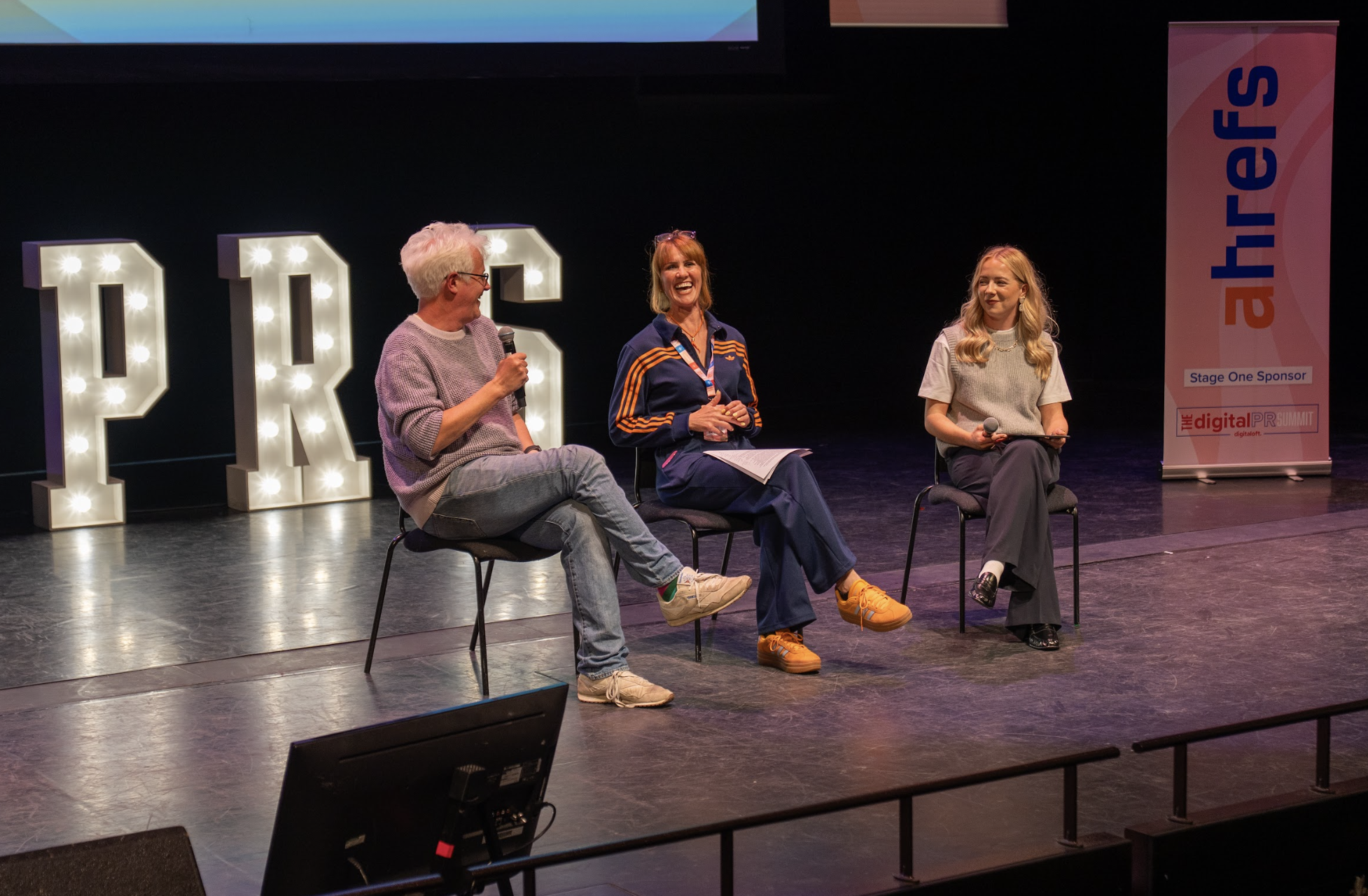
International Digital PR, Analysing Over 100 Campaigns’ Success
Hana Montgomery | Founder, Shout Bravo
Opening the show on stage 2 was Shout Bravo’s Hana Montgomery, who spoke about how running digital PR internationally sounds straightforward…until you actually try to do it properly!
On paper, it’s easy: translate the content, adjust a few details, have your SEO specialists add the correct hreflang tags in the page’s HTML, and push it out to local media.
But Hana’s message was that’s exactly where things go wrong.
Sharing her analysis of 100s of campaigns made it clear that localisation isn’t about language. It’s about meaning. The same dataset or story can land completely differently, depending on where it’s being told.
One example made that obvious. A campaign around countries with the most roundabouts.
In some markets, it was framed as a win. In others, it triggered frustration. Elsewhere, it was reported neutrally or with humour. Same data. Completely different narratives.
That’s not a translation issue. It’s a socio-cultural context issue.
Different countries interpret stories through different lenses – cultural, political, and emotional. What feels light-hearted in one market can feel critical in another. What feels like a strong angle in the UK might not register at all elsewhere.
And that’s where a lot of international campaigns can fall flat, because they’re built with a single narrative that’s then stretched across multiple markets rather than shaped to fit each one properly.
The campaigns that work take a different approach. They adapt the angle, not just the language. They understand what each market cares about and position the story accordingly.
What this means in practice:
- Don’t translate headlines – translate the news value
- Adapt angles to fit cultural context, not just language
- Expect different interpretations of the same data
- Build flexibility into campaigns from the start
- Treat each market as its own audience, not an extension of another
The Quarterly PR Pivot: How to Know When a Strategy Is Dying (And What to Do Next)
Laura Wilson | Head of Outreach Strategy, BarringtonSEO
We’ve all been there: it’s a great idea with huge potential, but something about the campaign just isn’t working.
Results slow down. Coverage drops off. And the instinct is to push harder – more outreach, more follow-ups, more of the same. But that’s rarely the fix.
Laura Wilson’s session focused on what’s actually happening in those moments. Because more often than not, the issue isn’t the idea itself. It’s everything around it.
Sometimes it’s deliverability. Sometimes it’s outreach fatigue. Sometimes journalists just aren’t interested in that angle anymore. And if you don’t stop to figure out which one it is, you end up amplifying the problem rather than solving it.
It sounds simple in theory, but in reality, it’s harder because it requires stepping back and pressing pause.
Laura broke it down into a process: diagnose what’s actually going wrong, stabilise performance by adjusting outreach or angles, re-anchor back to the original goal, then rebuild with a clearer direction.
What this means in practice:
- Diagnose issues before increasing output
- Pay attention to deliverability, not just open rates
- Revisit the original goal before changing direction
- Adapt angles based on what’s actually landing
- Treat campaigns as something to evolve, not just execute and move on
Building a Creative Culture that Works For Different Personalities (and in Different Locations)
Richard Paul | Creative Director, Propellernet
Richard started his talk with a message that resonated with the entire room: great ideas don’t always come from the loudest people.
The reality is that, for many teams, especially distributed ones with remote workers, creativity isn’t the problem. It’s how that creativity is unlocked.
Traditional brainstorming tends to favour certain personalities. Fast thinkers with confident voices who are comfortable speaking up early. But that doesn’t mean the best ideas are coming through.
In fact, as Richard explained, they often aren’t.
Throughout his talk, he made the case for balancing traditional ideation formats with more structured approaches like brainwriting, which gives people time and space to think before sharing. It’s a small shift, but it can change who feels able to contribute.
There were also some practical reminders that feel obvious, but are easy to overlook. Regular ideation sessions that aren’t tied to immediate briefs. Creating space for “dream client” thinking. Even simple things like how meetings are run – who speaks first, and how ideas are introduced – can shape the output.
On this point, one theme stood out: if leaders share their ideas or points of view first, they set the tone and direction. Sure, this isn’t always intentional (sometimes it’s the exact opposite), but it happens, especially when more junior or easily influenced team members are involved.
To make ideation work for everyone, the action points were to:
- Balance brainstorming with structured ideation like brainwriting
- Create space for ideas outside of live briefs
- Be intentional about how meetings are run and who contributes first
- Treat creativity as something to facilitate, not expect
Where Data Meets Storytelling
George Sinnott | Head of Data Translation, Six Chillies
Data on its own doesn’t land. And neither does storytelling without something tangible behind it.
George Sinnott’s session sat right in the middle of that tension, because most campaigns lean too far one way. Either overloaded with numbers or built on a narrative that doesn’t quite hold up when pressed, either by readers or journalists.
Achieving a balance between the two – credible data and careful narrative framing – is where things start to work.
Data itself is neutral, George reminded us. It doesn’t actually say anything until someone interprets and contextualises it within something bigger.
And this is our responsibility as PRs and content teams – actively choosing what the truth of the data is and deciding what matters enough to catalyse media attention.
In practice, this means:
- Don’t rely on data alone; build a narrative around it
- Avoid storytelling that isn’t backed by evidence
- Focus on what the data actually means, not just what it shows
- Connect insights to real-world impact and human stories
- Treat interpretation and contextualisation as core skills, not an afterthought
Using AI and Custom GPTs to Take Your Digital PR Strategies to the Next Level
Amanda Walls | Director, Cedarwood Digital
AI was an issue that ran deep through the entire Summit, but this was one of the sessions that grounded it properly and focused on providing actionable tactics to make it work for you, rather than against you.
Amanda’s message was that we need to be thinking about where AI tools can add value within a digital PR workflow – not to replace thinking and human creativity, but to remove friction and free up resources to work smarter.
In PR, SEO, and content marketing, there’s a lot of time spent on repetitive, manual tasks. Research, formatting, sense-checking, compliance checks. The kind of work that has to be done, but doesn’t move strategy forward.
To combat this, Amanda shared a series of personal use cases demonstrating how custom GPTs can transform workflows and improve output, particularly in complex or regulated industries where content must be carefully reviewed before being sent to clients.
Amanda showed delegates how leveraging AI in this way can reduce back-and-forth with clients, protect relationships by eliminating the need for multiple rounds of amends, and free up our own time to do actual creative thinking that will push results further.
In practice, these insights told us to:
- Use AI to streamline repetitive, time-heavy tasks
- Apply it early in workflows to reduce client back-and-forth
- Leverage it for compliance and risk-checking where relevant
- Keep strategy and creative thinking human-led
- Put the necessary time into training custom GPTs, where needed
3 Ways to Use AI to Run Data Campaigns Without a Developer
Sacha Fournier | Founder, JournoFinder
A lot of data-led PR has historically been limited by access – whether that’s access to developers, tools, know-how, or original datasets.
Sacha cut to the chase and showed us how to face that head-on using Claude Code.
Leaning on his expertise and experience gained from working as a Data Analyst at Deloitte, Sacha shared a no-strings-attached Claude Skill (a reusable package of instructions that teaches the Claude AI to perform specific tasks) he’d developed to extract data directly from mobile apps – reviews, listings, features, user-generated content – the kind of information that isn’t neatly packaged or widely available.
Being able to do this changes the starting point for a lot of digital PR ideation, as the barrier to creativity is no longer technical…it’s whether you’re willing to go and get something original.
Sacha showcased what was possible with his Skill and workflow, analysing data scraped from the Too Good To Go, Domino’s, and Wetherspoons mobile apps to uncover hidden gem campaign ideas others won’t have access to.
Beyond the practicalities of using Claude Code, the main learnings from Sacha’s session were to:
- Look beyond traditional datasets, as apps are an underused source
- Focus on originality in your data source, not just your angle
- Don’t rely on developer resources as a limiting factor
- Treat access to data as something you can actively create, thanks to new AI tools
Beyond Google: How TikTok and Social Search Are Changing Brand Discovery
Isa Lavahun | Freelance Digital PR Strategist, Lavly Ltd
There’s no use hiding behind the obvious: search doesn’t look the same as it did last year, or even last month!
Yes, Google has undergone some fairly seismic shifts in recent times, but not all of the change is happening on traditional SERPs. Some of it is happening on social platforms.
Isa Lavahun’s session explored how platforms like TikTok and Instagram are shaping discovery in ways traditional keyword research can’t fully capture, because they reveal something fundamentally different – feeling and individuality.
Trends, behaviours, frustrations, and intent are all playing out in real time. You can see how people talk about things, how they experience them, and what actually matters to them.
At the same time, Isa acknowledged how publishers are adapting. Short-form content is becoming a bigger part of how stories are told and distributed in traditional media, which means the way ideas are packaged for journalists matters more than ever.
What this means is:
- Use social platforms to understand emerging behaviours and trends
- Look beyond keywords to understand intent and emotion
- Build campaigns that can translate into multiple formats
- Consider how stories work in video, not just in written form
- Align PR outputs with how people actually consume content
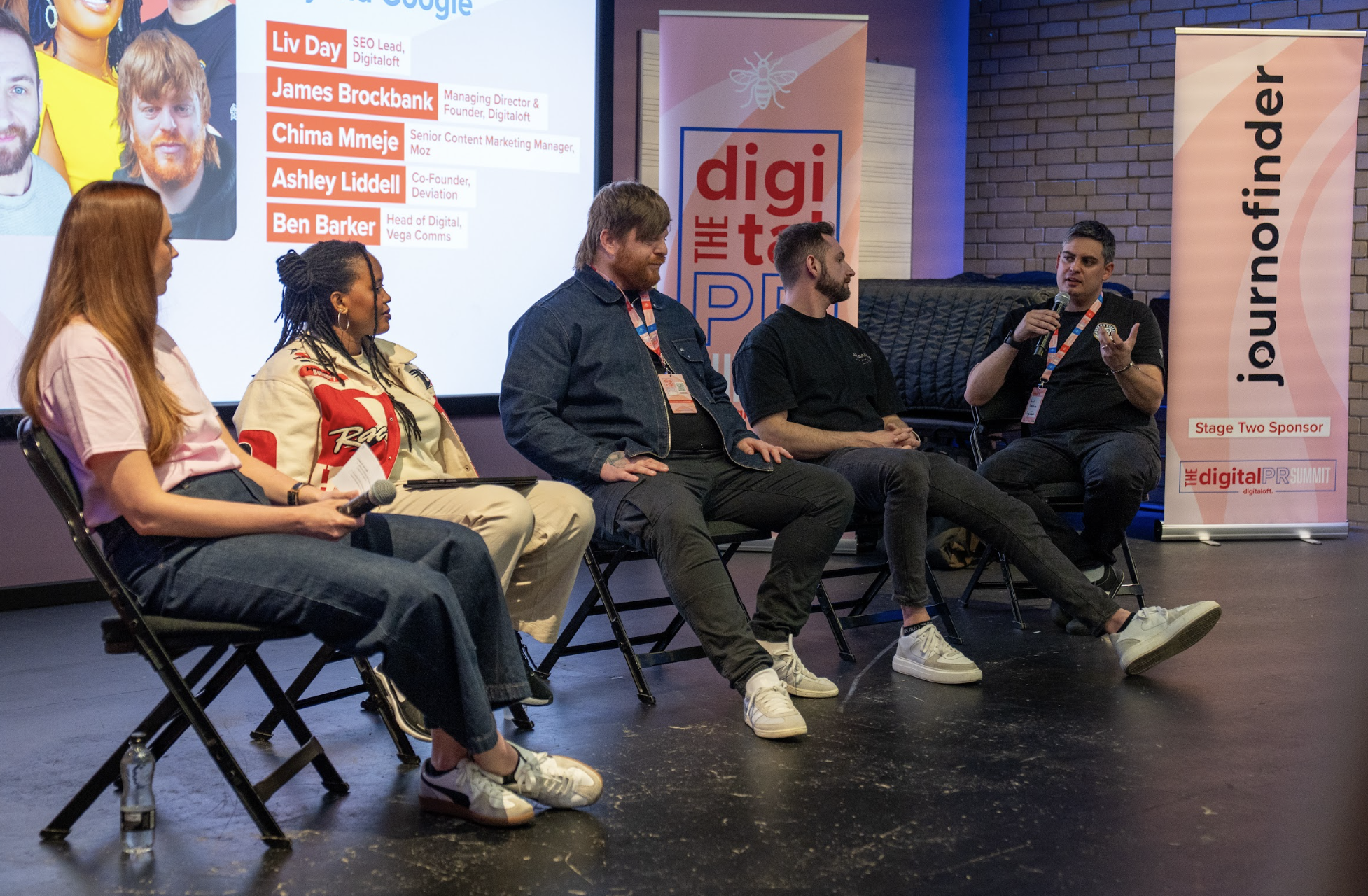
Panel: Influencing Brand Visibility in Search Beyond Google
James Brockbank, Chima Mmeje, Ashley Liddell, and Ben Barker, moderated by Liv Day
There’s a tendency amongst SEOs and those interested in search to treat AI optimisation as something entirely different and new.
AIO, GEO, AISEO, LLMSEO…whatever acronym you’ve seen being used…they all refer to the same fundamental thing – great SEO, evolving.
The panel discussion framed what’s changing in more down-to-earth terms, seeing it as an extension of existing tactics and goals with the same focus on clear page structures, strong content, and credibility signals in the right places.
There was also a strong point around strategic prioritisation. Trying to be everything to everyone doesn’t work, especially when the majority of brands simply don’t have the resources to spread themselves so widely. The clearer you are about what you stand for and what your growth focuses need to be, the easier it is for both users and machines to understand and associate you with the right things, thereby catalysing commercial gains.
The key take-home messages from the panel (which was a dynamic discussion in every sense of the word) were:
- Align on-page messaging with external coverage
- Be consistent in how your brand is described across channels
- Focus on building clear associations within your niche
- Don’t rely on visibility alone – focus on relevance
- Treat AI search as an extension of good SEO, not a replacement
Who Tells Your Brand Story in 2026
Michael Bates | Head of Organic Search, Herd
Michael forced us to face up to an uncomfortable truth: brands don’t control their story as much as they think they do.
In his session, he explored the idea that brands are concepts that exist through shared understanding, not just messaging, which is exactly where things can get messy.
Because once a brand is out in the world, it’s constantly being interpreted. By customers, by media, by platforms. And those interpretations don’t always match what was intended in a boardroom.
To combat this, we need to prioritise the most important elements we want to stick in our target audiences’ hearts and minds. The more consistent and focused that is, the more likely it is to carry through, even as it’s reshaped in different contexts.
If it’s inconsistent, it creates noise that dilutes messaging and makes it harder to establish brand fundamentals.
What this means in practice:
- Define a clear, simple core message for your brand
- Accept that not all interpretations can be controlled
- Focus on consistency across channels
- Avoid sending conflicting signals about what you stand for
- Prioritise clarity over complexity
SEO and Brand Sitting in a Tree K-I-S-S-I-N-G
Lidia Infante | Senior SEO Manager, Survey Monkey
SEO and brand have always been connected, but now they’re even harder to separate.
Lidia’s session highlighted how that relationship is becoming more visible, especially in how search engines and AI tools interpret brands.
Consistency came up again and again. Not just in messaging, but in the details. Brand name, spelling, description, positioning – every touchpoint contributes to how confidently a brand can be understood.
And in the age of AI, that understanding is being drawn from multiple sources. Owned assets (the brand’s own website) alongside social platforms, influencer content, third-party mentions, and so on, with everything feeding into a bigger picture of what a brand is and what it’s associated with thematically.
There was also a practical angle to Lidia’s message. Tools that can help track how well a brand is understood over time. Not just how it ranks, but how confidently it’s recognised.
What this means in practice:
- Keep brand messaging consistent across all platforms
- Align naming, positioning, and descriptions everywhere
- Monitor how your brand is being interpreted, not just ranked
- Treat influencer and third-party content as part of your brand footprint
The Role of Digital PR in SEO and the Wider Marketing Mix in 2026
James Roach | Head of Digital PR, Honcho
James Roach’s session reinforced just how much that role has expanded. Digital PR isn’t just about generating coverage or supporting SEO in isolation – it’s influencing how brands show up across search, how they’re talked about in the media, and how consistently they’re represented across different platforms. All of those signals feed into performance, whether that’s rankings, traffic, or ultimately revenue.
That shift requires a different way of thinking.
Instead of treating PR, SEO, and brand as separate disciplines, they need to operate as part of a connected system. Activity in one area has a direct impact on the others, and when those efforts aren’t aligned, the overall effect is diluted. The brands seeing the strongest results are those bringing those pieces together, using digital PR to reinforce messaging, boost search visibility, and advance broader marketing goals.
The takeaway was less about changing what digital PR is, and more about recognising what it already is – a core part of the marketing mix, not a supporting function. And once it’s treated that way, both strategy and results start to look very different.
In practice, these learnings mean we need to:
- Treat digital PR as a core marketing function, not a standalone channel
- Align PR activity with SEO, brand, and wider business goals
- Focus on quality and relevance over volume
- Use PR to reinforce consistent messaging across channels
Insight analysis: The big themes and trends shaping digital PR in 2026
The takeaways are clear. But when you zoom out, a few bigger shifts start to emerge that signal where digital PR is heading next.
Theme 1: Most teams are still optimising for output, not impact
There’s a growing disconnect between effort and results.
More outreach. More campaigns. More activity. But not necessarily more impact.
Across multiple talks, one thing became obvious: volume has become a comfort zone. It’s easy to measure, justify, and report on.
But it’s no longer what drives results.
The teams seeing consistent success are doing less—but doing it with far more intent. Tighter targeting, stronger angles, better timing.
That shift sounds simple. In practice, it requires a complete rethink of how campaigns are planned and evaluated.
Theme 2: Digital PR is an influence layer across everything
There was a time when digital PR was in its own lane, siloed from other channels and tactics.
Now, that’s change, and there’s a growing awareness of how digital PR touches:
- Search visibility
- Brand perception and awareness
- AI visibility
- Social discovery
This creates both opportunities and complexities.
Because success is no longer isolated to a single outcome. A campaign might drive branded search, influence how a brand appears in AI search spaces, and reinforce messaging across multiple channels…but if those signals aren’t aligned and coherent, the impact is diluted.
PR is now about more than getting coverage and backlinks. In 2026, successful digital PR campaigns will be about shaping how brands are understood everywhere, not just in the media.
Trend 3: AI has made ‘average’ easier, and ‘great’ harder
This one spans digital PR, SEO, content, social, you name it…
AI has completely removed the value of mediocrity.
Generic ideas, templated outreach, surface-level insights – these are now easier than ever to produce, which means they’re easier than ever to ignore.
At the same time, and in direct response to this, the bar for what does get attention has been raised. Now, consumers demand stronger ideas, clearer narratives, bolder creativity, more credible sources, deeper originality, and more humanity.
The competitive advantage now lies with teams positioned to leverage the efficiency AI tools offer, while pouring the time and resources saved into originality.
And the teams that recognise this now are the ones who will pull ahead.
Trend 4: Brand consistency is becoming more of a ranking factor
One of the more subtle, but important, shifts seen across the Summit’s talks is how brands are being interpreted.
Search engines, AI tools, and audiences are all doing the same thing: trying to understand what a brand is, what it does, and what it stands for.
To do this, they’re pulling from multiple sources – press coverage, website content, social profiles, third-party mentions, and so on. But if these signals don’t align and appear in sync, confidence drops.
Digital PR plays a key role in reinforcing and amplifying entity signals across channels to ensure that audience perceptions of brands are as accurate as possible.
Reflecting on the day, Amy Gibson, Strategy Director at Digitaloft, said:
“The feedback from this year’s Digital PR Summit has been incredible. Last year, we set ourselves a goal to level up everything about the event, and reading the response afterwards, we definitely delivered.”
“When curating the lineup for this year’s event, we worked very hard to have a mixture of practical, hands-on talks, as well as bigger, more inspirational sessions. We also didn’t want the conference to be just AI talks”, Amy continued, “it was really important to us to strike the right balance. Our journalist panel, for example, is always one of the most popular sessions, and we couldn’t wait to bring this back for the third year in a row.”
“When we launched the Digital PR Summit, we set out to bring our industry together with its own dedicated conference, rather than digital PR sessions just being tagged onto SEO conferences. We also wanted to give a platform to people who haven’t yet had the chance to speak in the industry. This year, we had three people deliver their first in-person talk at the Digital PR Summit, and we’re incredibly proud that the Summit can play a small part in helping share the next generation of voices in digital PR.”
“We’re so proud of what the Digital PR Summit has become, and even more excited about where we can take it next. See you all in 2027!”
Final thoughts
The 2026 Digital PR Summit was bigger, better, and bolder than ever, and not just in scale.
Across the day, one message came through clearly: digital PR is evolving fast, and the standard is rising with it. What worked before can still work, but only if it’s sharper, more relevant, and more clearly tied to real outcomes.
There’s less room for noise, and more emphasis on credibility, clarity, and impact.
At the same time, the opportunity is bigger. Digital PR now shapes how brands are discovered, understood, and chosen across search, social, and AI…which requires more than just securing coverage.
And it’s why the gap between teams that adapt and those that don’t is becoming more obvious.
The takeaway isn’t to overhaul everything. It’s to focus on what actually moves the so-called needle: clear ideas, strong positioning, credible voices, and a better understanding of how PR fits into the wider marketing mix.